Wreck of the Santa María and La Navidad
Early on Christmas Day 1492 the Santa María ran aground off Hispaniola. Columbus built the fort of La Navidad from her timbers and left 39 men; when he returned the next year all were dead.
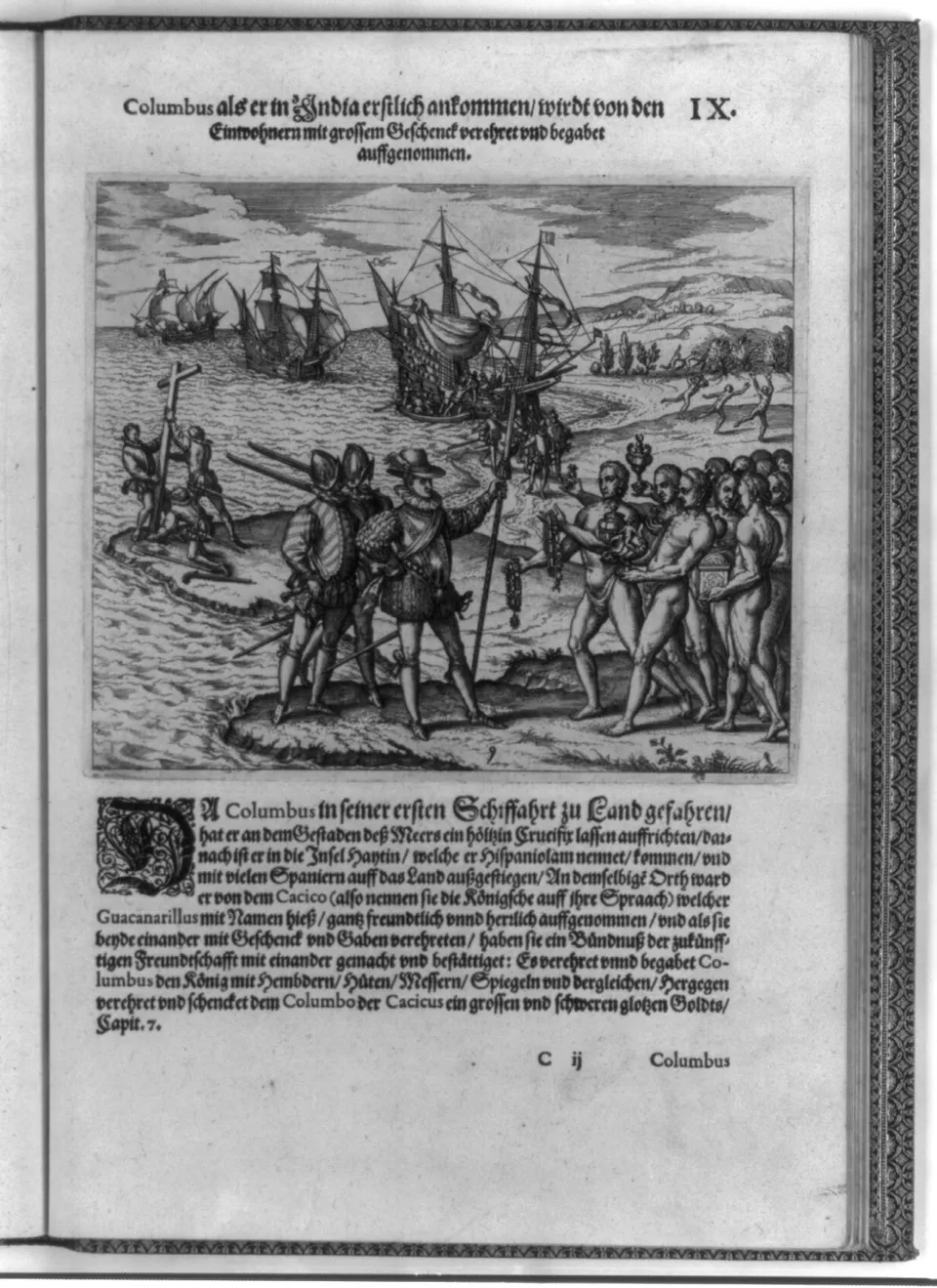
Miscellaneous Items in High Demand, PPOC, Library of Congress · Public domain · Source
After landing at San Salvador Columbus followed the coast of Cuba, believing it to be the edge of Asia, and then reached the large island of Hispaniola. On the night of 24 December, with a ship’s boy at the helm, the Santa María struck a reef. The local Taíno chief Guacanagarí sent men and canoes to help unload her.
Unable to take everyone home, Columbus built a fort from the Santa María’s timbers, named it La Navidad for Christmas, and left 39 men — the first European outpost in the Americas. When he returned on his second voyage in November 1493 the fort had been burned and every man was dead; they are said to have quarrelled over gold and women and been attacked by another chief, Caonabo.