Matteo Ricci and Western Learning
Also called: Kunyu wanguo quantu, The True Meaning of the Lord of Heaven, Jesuits in China
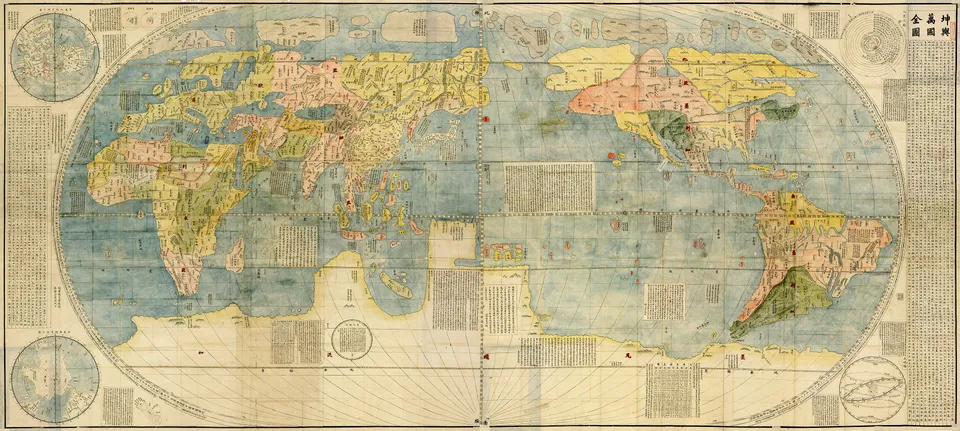
The Jesuit Matteo Ricci entered Beijing in 1601 and, through his world map and The True Meaning of the Lord of Heaven, introduced Western geography, science and Catholicism in Chinese. Carried home by envoys, these works reached Korea as “Western Learning” (Seohak).
Matteo Ricci · Public domain · Source
The Society of Jesus, born of the Catholic Reformation’s response to the Protestant Reformation, sent missionaries across Asia. The Italian Matteo Ricci reached Macau in 1582 and the next year entered Zhaoqing in Guangdong, where he learned Chinese and the Confucian classics. He first dressed as a Buddhist monk but switched to the robes of a Confucian scholar, approaching the literati by equating the Christian God with the Lord on High (Shangdi) of the classics and treating ancestral rites as civil custom.
Entering Beijing in 1601, Ricci won permission to stay by presenting the Wanli Emperor with chiming clocks, Western paintings and other gifts. His world map of 1602 (Kunyu wanguo quantu) shook the belief that China stood at the centre of the world, and in 1603 The True Meaning of the Lord of Heaven set out Catholic doctrine in classical Chinese. With the scholar and convert Xu Guangqi he translated Euclid’s geometry as Jihe yuanben (1607).
After Ricci died in Beijing in 1610, Jesuits such as Adam Schall served the Ming and Qing courts with their calendar science and cannon. Schall’s Western-style calendar became the Qing Shixian calendar, adopted by Joseon in 1653. Ricci’s books and map reached Korea with envoys returning from Beijing, were introduced in Yi Su-gwang’s Jibong yuseol and widened the worldview of the Silhak scholars, and in the late eighteenth century were embraced as faith. But when the papacy banned ancestral rites (the Chinese Rites controversy), the Qing grew wary of Christianity, and the Yongzheng Emperor prohibited preaching in 1724.