Great Dharani Sutra of Immaculate and Pure Light
Also called: Mugujeonggwang Daedaranigyeong
A sutra scroll found inside the Seokgatap pagoda of Bulguksa, counted among the oldest surviving woodblock prints in the world.
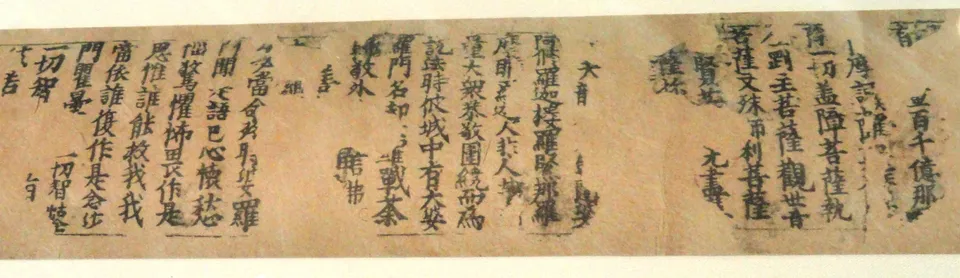
It was found in 1966 among the reliquary objects inside the three-storey pagoda of Bulguksa (Seokgatap), during repairs after grave robbers had damaged it. The dharani (incantation) was printed from woodblocks onto a scroll of joined mulberry paper. The sutra was translated into Chinese in Tang in 704 and the pagoda was built around 751, so it is thought to have been printed in between. It is a National Treasure.
Placing this dharani in a pagoda when building or repairing it was believed to bring great merit. Because it uses characters invented under Empress Wu of Tang, some argue it was printed in China, but the prevailing view is that it was printed in Silla. It shows the advanced woodblock printing and papermaking of Unified Silla.