Politics11 February 1940
Name-Change Order (Sōshi-kaimei)
Japan made Koreans adopt Japanese-style family and given names. Those who refused faced penalties such as their children being barred from school and exclusion from food rations.
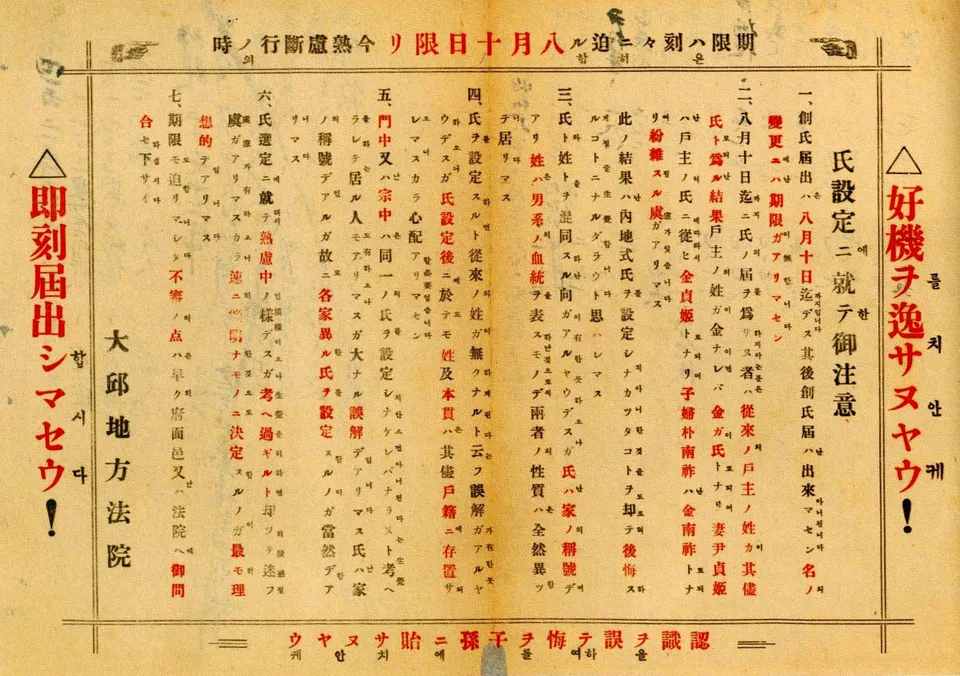
大邱地方法院 · Public domain · Source
The Korean Civil Ordinance was amended in 1939 and the change took effect on 11 February 1940. Registration was nominally voluntary, but those who did not register within six months found their children barred from school, their business with government offices refused and their rations withheld, so most had no choice.
Part of the imperial-subject policy, it aimed to destroy Korean identity by breaking the tradition of lineage and surname. Some refused to the end.