Conflict17 September 1940

Founding of the Korean Liberation Army

Settled in Chongqing, the Provisional Government founded the Korean Liberation Army under Commander-in-Chief Ji Cheong-cheon; the Korean Volunteer Corps joined it in 1942.
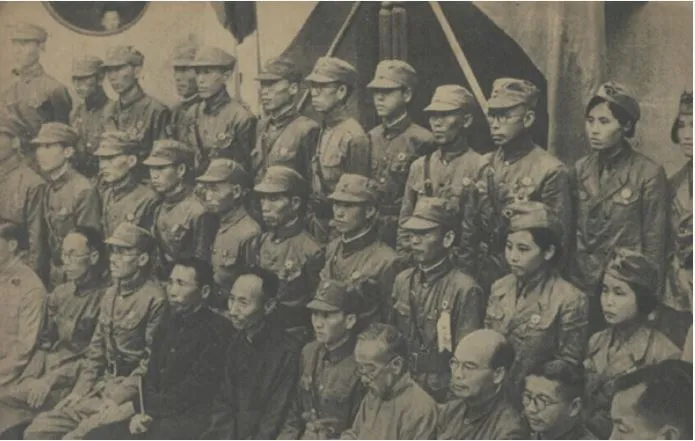
Inauguration ceremony of the Korean Liberation Army headquarters — Chongqing, 17 September 1940

Unknown author · Public domain · Source

Settling in Chongqing in 1940, the Provisional Government took the Korea Independence Party as its ruling party and adopted single leadership under Chairman Kim Gu. On 17 September it founded the Liberation Army with Chinese Nationalist support (commander Ji Cheong-cheon, chief of staff Lee Beom-seok). At first it was bound by the "Nine Rules of Action" placing it under the Chinese Military Affairs Commission, which were abolished in 1944.

When the Pacific War broke out in 1941, the government declared war on Japan. In 1942 the main body of Kim Won-bong’s Volunteer Corps joined, with Kim as deputy commander, and in 1944 Kim Kyu-sik became Vice-Chairman, making it a left–right coalition. In 1943, at British request, members went to the India–Burma front to interrogate prisoners, translate documents and conduct propaganda.

The map in 1940

OpenFreeMap © OpenMapTiles © OpenStreetMap contributors

States at the time
Republic of China · sponsor
Places
Provisional Government Building, Chongqing

People

  • Kim Gu1876 – 1949

    leader · Known as Baekbeom; founded the Korean Patriotic Organization and led the Liberation Army as Chairman of the Provisional Government

  • Ji Cheong-cheon1888 – 1957

    commander · Commander of the Korean Independence Army in the joint Korea–China campaigns and Commander-in-Chief of the Liberation Army

  • Lee Beom-seok1900 – 1972

    commander · Officer at the Battle of Cheongsan-ri, later chief of staff and Second Detachment commander of the Korean Liberation Army

  • Kim Won-bong1898 – 1958

    commander · Leader of the Uiyeoldan, the National Revolutionary Party and the Korean Volunteer Corps; Deputy Commander of the Liberation Army

  • Kim Kyu-sik1881 – 1950

    related figure · Envoy of the New Korea Youth Party to the Paris Peace Conference, later Vice-Chairman of the Provisional Government

Before and after

Themes that include this event

  • World War II and Korea1937 – 1945

    Wartime mobilization and exploitation, independence armies, from the Cairo Declaration to liberation

  • Republican China and Imperial Japan1912 – 1949

    The age when the Republic of China, born of the 1911 Revolution, passed through warlord division, the May Fourth Movement, the United Front and the Northern Expedition, fought Japan’s invasion and split in civil war — as Japan moved from Taishō democracy through the Manchurian Incident and military coups to the war in China and the Co-Prosperity Sphere, and colonized Korea resisted through the March First Movement and armed struggle