Conflict1107–1109

Yun Gwan’s Jurchen Campaign and the Nine Forts

Yun Gwan led 170,000 men of the Byeolmuban against the Jurchens and built nine forts in the northeast, but they were handed back after little more than a year.
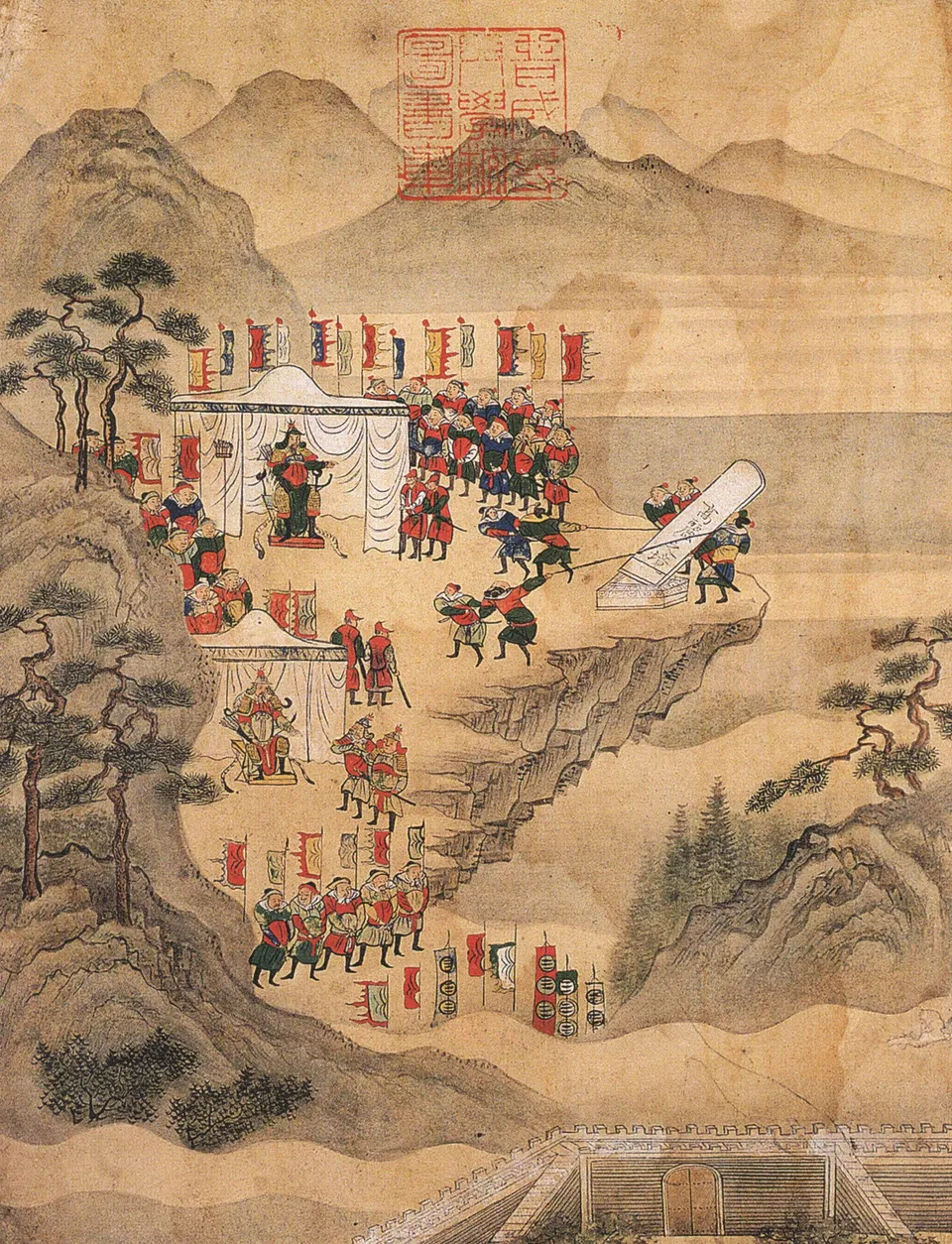
Cheokgyeong Ipbido — Yun Gwan erecting a boundary stele after driving out the Jurchens, from a late Joseon album

Unknown author · Public domain · Source

In 1107 Goryeo forces under Yun Gwan and O Yeon-chong destroyed some 130 Jurchen villages and built nine forts including Hamju, Yeongju, Ungju, Bokju, Gilju and Gongheomjin. Their location is disputed: the Hamhung plain, the area south of Kilju, or — for Gongheomjin — beyond the Tumen.

The Jurchens asked for the land back, promising tribute and peace, and Goryeo, finding the distant forts hard to hold, returned them in 1109. The Jurchens went on to found Jin in 1115, destroy Liao in 1125 and demand that Goryeo acknowledge Jin as its suzerain.

The map in 1107

OpenFreeMap © OpenMapTiles © OpenStreetMap contributors

States and rulers at the time
Goryeo — Yejong

People

  • Yun Gwan1111

    commander · General who created the Byeolmuban army and built the Nine Forts after defeating the Jurchens

  • King Yejong1079 – 1122

    monarch · Sixteenth king of Goryeo, who sent Yun Gwan to build the Nine Forts and revived state schooling

Before and after

Themes that include this event

  • Song, Ming and Samurai JapanAD 960 – 1500

    The age when the civil-minded Song bought peace from Liao, Western Xia and Jin while the lower Yangtze boomed and Neo-Confucianism took shape, and the Ming, having driven out the Yuan, rebuilt the East Asian order through imperial autocracy, the sea ban and tribute — as Japan passed through the Kamakura and Muromachi warrior governments into the Warring States era, and Korea from Goryeo to Joseon