Gandhi’s Non-violent Non-cooperation Movement
Also called: Non-cooperation Movement, Khilafat Movement
Gandhi and the Indian National Congress led a non-violent movement to boycott British goods, schools, courts and offices—the first nationwide mass movement uniting Hindus and Muslims.
Unknown author · Public domain · Source
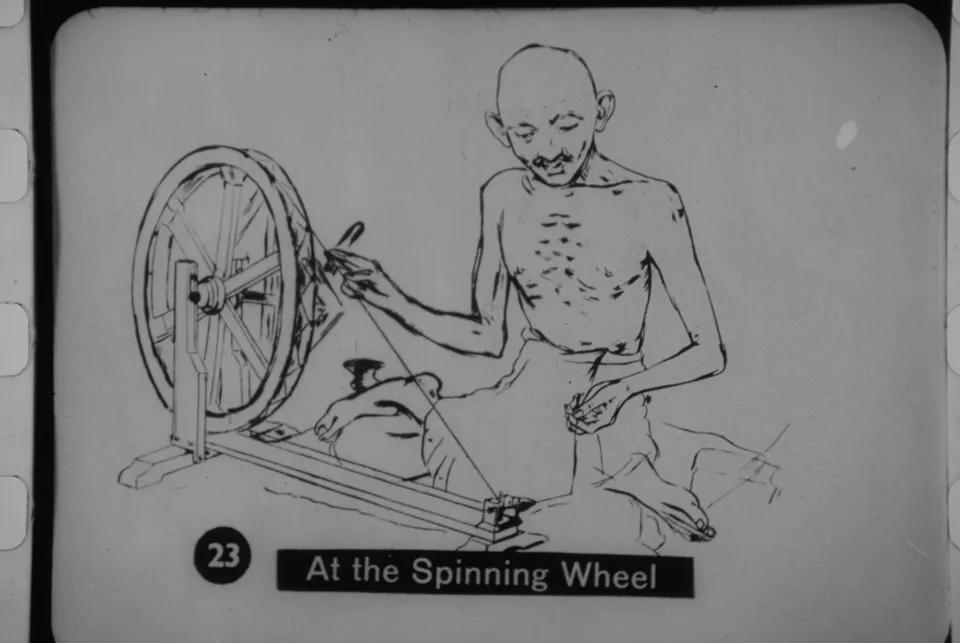
Gandhi, who had developed satyagraha ("holding to truth") as non-violent resistance to discrimination against Indians in South Africa, returned to India in 1915. Because the Rowlatt Act, the Amritsar massacre and Britain’s postwar reform (the Government of India Act 1919) fell far short of self-government, the Congress adopted Gandhi’s proposal of non-cooperation in 1920. Indians were to give up British titles and posts, boycott government schools, courts and elections, and wear hand-woven Indian cloth (khadi) instead of British textiles. Gandhi spun at the wheel (charkha) himself as a symbol of swadeshi, the use of home-made goods.
With Muslims of the Khilafat movement, who sought to defend the Ottoman caliphate, joining in, it became India’s first nationwide mass movement, reaching beyond urban intellectuals to peasants and workers. Tens of thousands went to prison, and imports of British goods fell sharply.
But in February 1922 an angry crowd at Chauri Chaura set fire to a police station, killing some twenty policemen, and Gandhi called off the movement, saying non-violence had been broken. He was soon arrested and sentenced to six years. Though it did not achieve its aim, the movement turned the Congress into a mass party and made Gandhi the leader of Indian nationalism.