Norman Conquest of England
Also called: Battle of Hastings
In 1066 Duke William of Normandy defeated King Harold II of England at the Battle of Hastings and took the throne, founding the Norman dynasty.
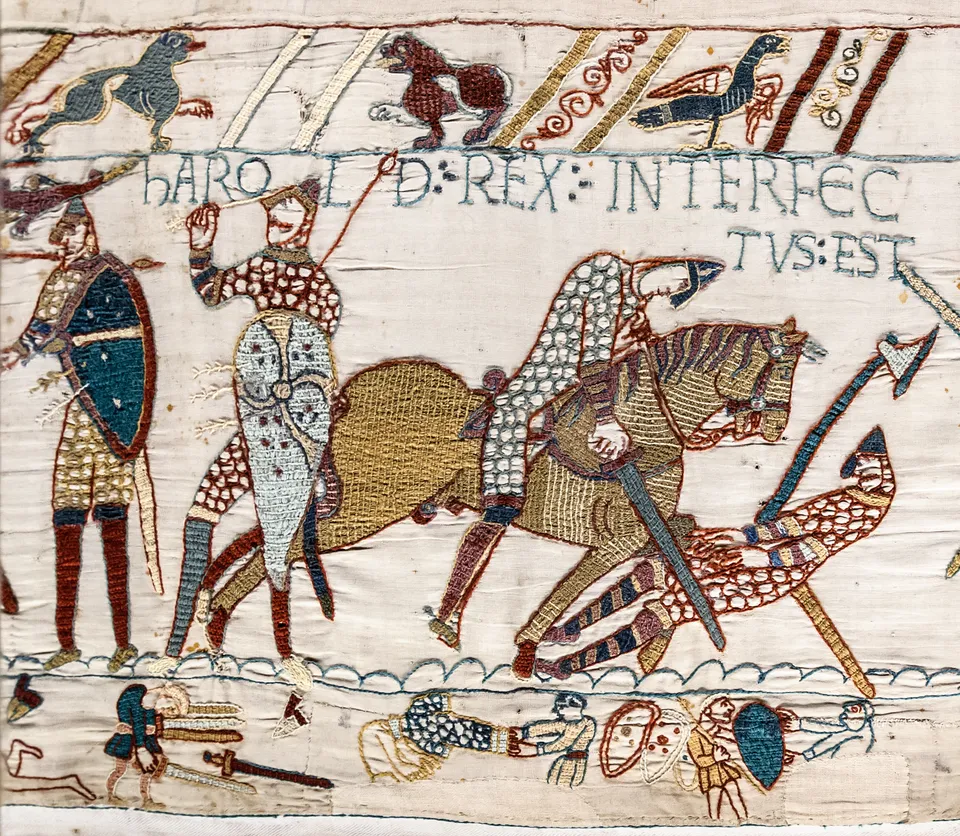
Myrabella · Public domain · Source
When King Edward of England died childless in January 1066 the nobles made Harold king, but Duke William of Normandy, claiming Edward had promised him the crown, crossed the Channel. Harold defeated the invading King Harald of Norway in the north and hurried south, only to be killed at the Battle of Hastings on 14 October. William was crowned at Westminster that Christmas.
William I confiscated land and granted it as fiefs to Norman knights, requiring every vassal to swear loyalty directly to the king, and so built a feudal monarchy stronger than those on the Continent. He also ordered the land survey known as the Domesday Book (1086). With a French-speaking ruling class, many French words entered English, and the English kings’ possession of lands in France sowed the seeds of the later Hundred Years’ War. At this time Goryeo was in the reign of King Munjong.