Northern Renaissance and Erasmus
Also called: Christian humanism, The Praise of Folly, Utopia
The Renaissance north of the Alps, beginning with 15th-century Flemish painting, developed into a Christian humanism that called for a return to Scripture and the early Church, and Erasmus satirised the Church in The Praise of Folly (1511).
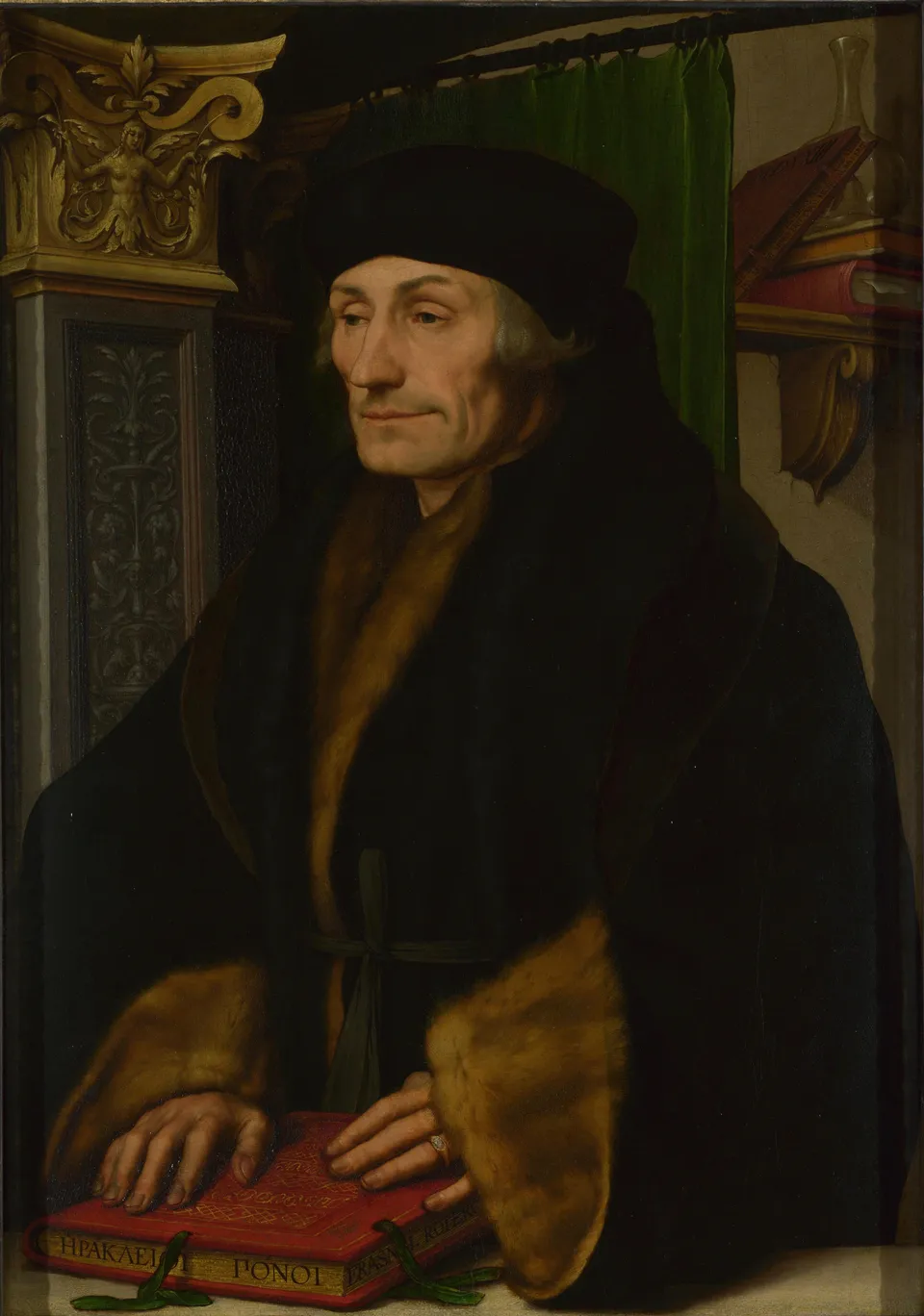
Hans Holbein the Younger · Public domain · Source
In Flanders Jan van Eyck refined the technique of oil painting to produce minutely realistic works such as the Ghent Altarpiece (1432), and in Germany Dürer absorbed Italian art and spread it widely through his prints. Humanism north of the Alps turned the study of the classics towards the study of the Bible and the early Church and tended strongly towards criticism of Church and society (Christian humanism).
Erasmus of Rotterdam satirised the hypocrisy of the clergy and empty ritual in The Praise of Folly (1511) and in 1516 published the Greek New Testament. In the same year Thomas More of England described in Utopia an ideal society without private property, pointing at the plight of peasants driven off the land by enclosure. As the saying goes, “Erasmus laid the egg that Luther hatched”: their criticism laid the ground for the Reformation that began the next year. At this time in Joseon, after the coup that enthroned King Jungjong (1506), Neo-Confucian scholars of the sarim such as Jo Gwang-jo were coming to the fore.