Numa Pompilius and the Nymph Egeria
Also called: Numa, Egeria, Temple of Janus
A legend handed down over the centuries.
A Roman legend told in Book 1 of Livy and Plutarch’s Life of Numa. Numa, the Sabine who succeeded Romulus as Rome’s second king, guided by the nymph Egeria, is said to have created Rome’s religion — its calendar, priesthoods, the Vestal Virgins and the temple of Janus.
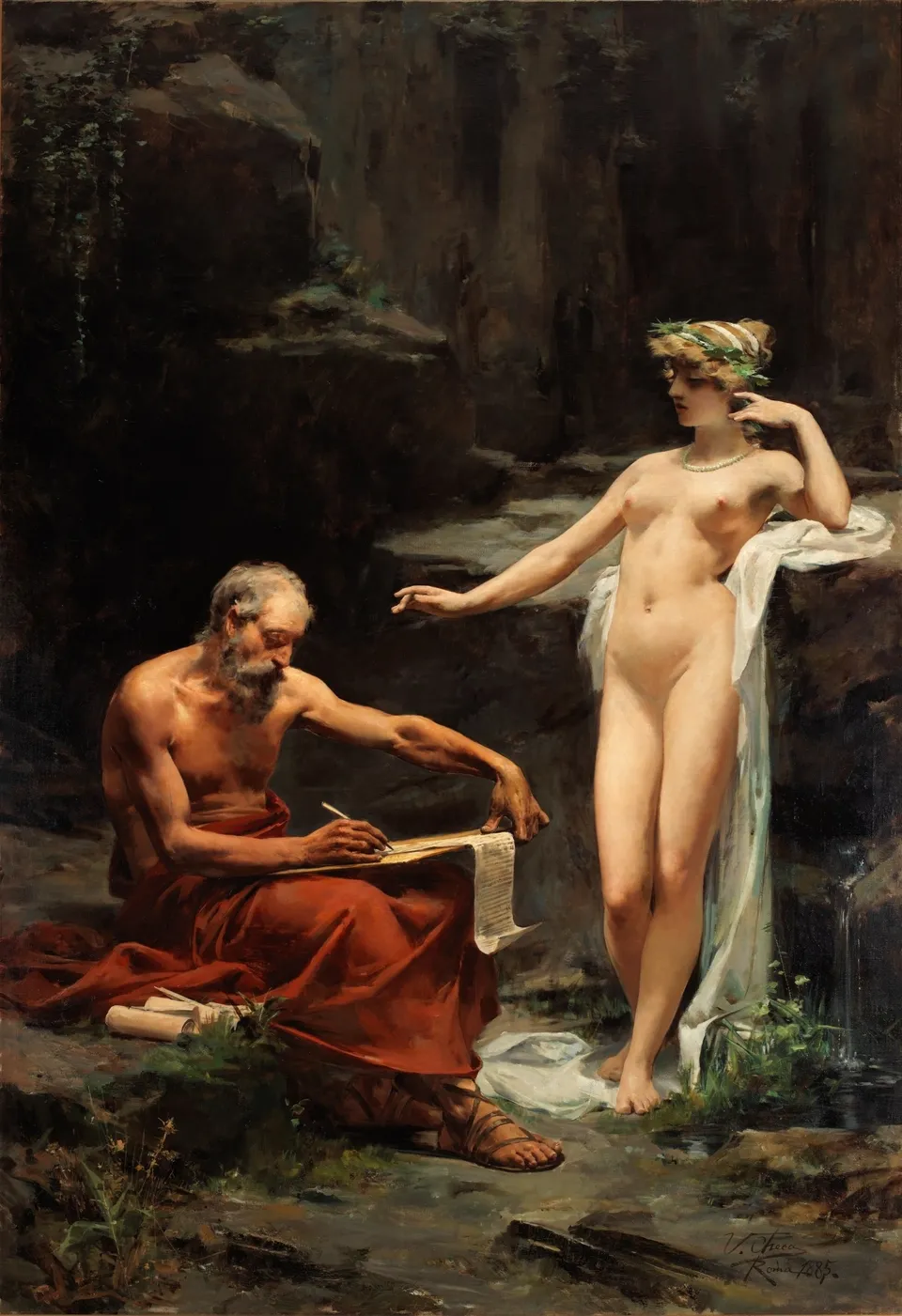
Ulpiano Checa · CC BY-SA 3.0 · Source
This Roman legend is told in Livy’s History of Rome (Book 1, chapters 18–21), Plutarch’s Life of Numa, and Ovid’s Fasti and Metamorphoses (Book 15). After Romulus vanished, the Senate chose as second king Numa Pompilius of the Sabine town of Cures, famous for his justice and piety. He is portrayed as the king who refounded a city born of war on law and religion.
Numa was said to meet at night with Egeria, the nymph of a spring in a grove, and to follow her teaching, which he invoked to make the people accept his institutions. He divided the year into twelve months (adding January and February, it was said), fixed the days lawful and unlawful for public business, and established the chief priest (pontifex), the priests of Jupiter and Mars, and the Vestal Virgins. He built the temple of Janus, whose doors stood open in war and closed in peace — and stayed closed throughout his 43-year reign. The Regia (“king’s house”) in the Forum and the temple of Vesta were also attributed to him.
A story made Numa a pupil of Pythagoras, but Livy rejected it, pointing out that Pythagoras lived more than a century later. Numa may have been a real person, but his achievements are seen as later Rome’s ancient institutions gathered under one name. Here he is placed as a legend attached to the real beginnings of the Roman Forum, dated to his traditional reign (715–673 BC).