Ōnin War and the Warring States Period
Also called: Ōnin–Bunmei War, Sengoku period, Gekokujō
A succession dispute over the shogun Ashikaga Yoshimasa, entangled with feuds among powerful shugo houses, set off the Ōnin War in Kyoto, which lasted eleven years from 1467. The shogunate’s authority collapsed and the Warring States (Sengoku) period began, with rival daimyo fighting amid gekokujō — “the low overthrowing the high”.
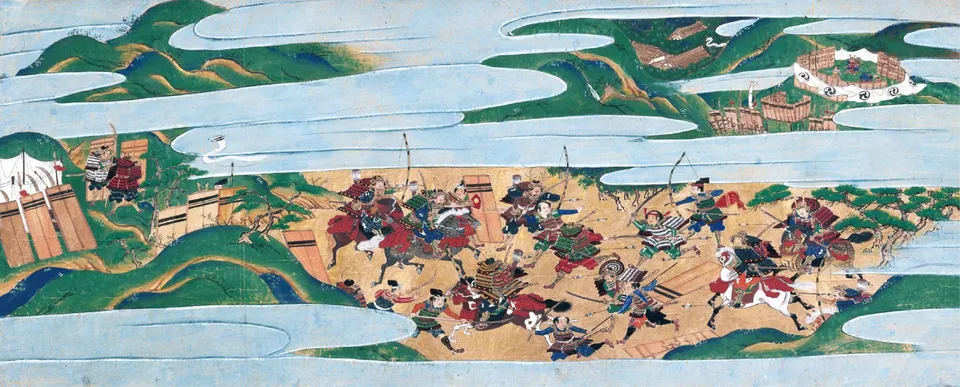
掃部助久国 Kamonnosuke Hisakuni · Public domain · Source
The court split between backers of the eighth shogun Yoshimasa’s brother Yoshimi and of his son Yoshihisa, and inheritance quarrels in the Hatakeyama and Shiba houses were added to the mix. The shogunate’s strongmen Hosokawa Katsumoto (Eastern Army) and Yamana Sōzen (Western Army) drew in daimyo from across the country, and fighting broke out in Kyoto in 1467; it dragged on until 1477 and left the city in ashes.
Afterwards the authority of the shogunate and the shugo daimyo collapsed, and amid gekokujō there arose Sengoku daimyo who ruled their domains directly and issued their own house laws. The Warring States period lasted until Oda Nobunaga and Toyotomi Hideyoshi unified the country in the late 16th century, and Hideyoshi then invaded Korea in 1592 (the Imjin War). Meanwhile western daimyo competed for trade with Joseon and the Ming, and in 1510 the Japanese residents of Joseon’s three ports rose in revolt.