Gorbachev’s Perestroika and Glasnost
Also called: Perestroika, Glasnost
Soviet leader Gorbachev introduced restructuring (perestroika) and openness (glasnost) and pursued arms control with the US through his “new thinking”. Communist regimes in Eastern Europe fell one after another and the Cold War ended.
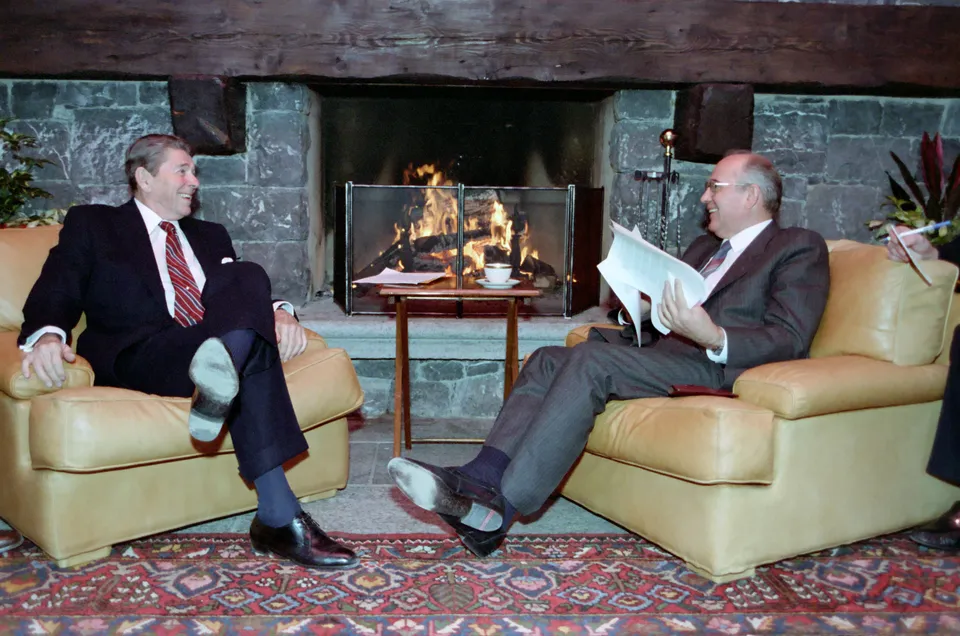
President (1981-1989 : Reagan). White House Photographic Office. 1981-1989 · Public domain · Source
Becoming general secretary in March 1985, Gorbachev sought to revive a stagnant economy with market-oriented restructuring (perestroika) and opened up the press and information (glasnost). The Chernobyl disaster of 1986 made the case for openness all the plainer.
Abroad, he signed the Intermediate-Range Nuclear Forces (INF) Treaty with the US in 1987, withdrew from Afghanistan and renounced interference in Eastern Europe. In 1989 communist regimes fell in Poland, Hungary, East Germany, Czechoslovakia, Romania and elsewhere, and at Malta that December Bush and Gorbachev declared the Cold War over. Amid economic crisis and ethnic conflict, however, the Soviet Union dissolved in 1991.