Rise of the Polis and the Olympic Games
Also called: Ancient Olympic Games
In the 8th century BC city-states (poleis) arose across Greece. Though each governed itself, they gathered for the festival of Zeus at Olympia and shared a sense of being Greeks.
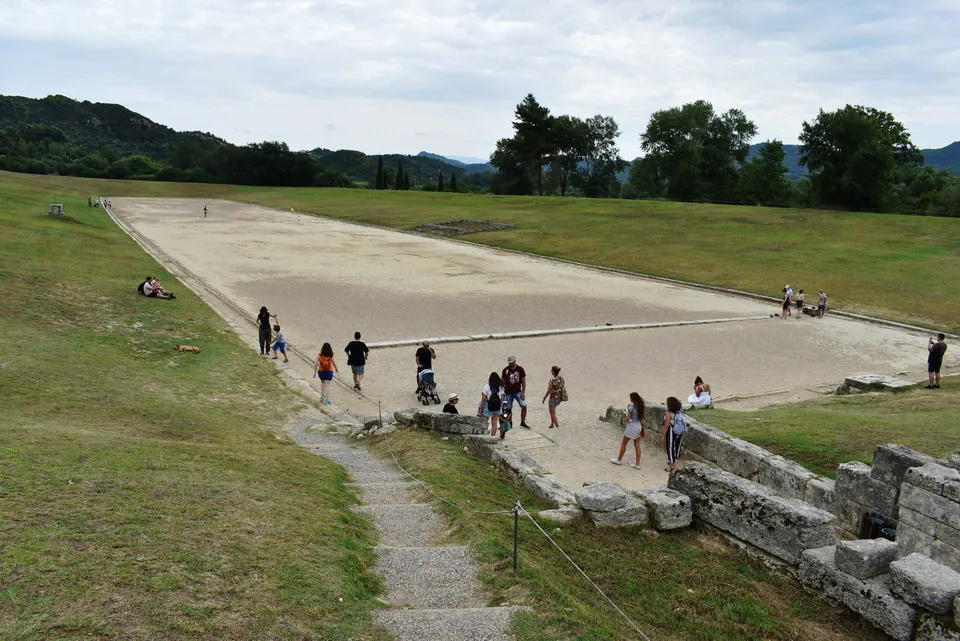
Annatsach · CC BY-SA 4.0 · Source
In mountainous Greece, with its narrow plains, aristocrats from around the 8th century BC led the founding of city-states — poleis — in which people gathered around a fortified hilltop (acropolis) and a public square (agora). Athens, Sparta, Corinth and many others were each independent states, and as their populations grew they planted colonies around the Mediterranean and the Black Sea.
The poleis never united politically, but they shared a language and gods, called themselves Hellenes and other peoples barbaroi. The games held every four years at the sanctuary of Zeus at Olympia expressed this common identity; tradition dates the first to 776 BC. A truce was proclaimed so that athletes and spectators could travel safely. The oracle of Apollo at Delphi was another shrine revered by all the poleis.
The Olympic festival is thought to have ended around 393, after Emperor Theodosius, who made Christianity the state religion, banned pagan sacrifice. It was revived as the modern Olympics in Athens in 1896.