Polynesian voyaging and the settlement of New Zealand
Also called: Polynesian navigation, Settlement of New Zealand, Māori arrival
Polynesians voyaging across the Pacific reached Hawaiʻi, Rapa Nui (Easter Island) and Aotearoa (New Zealand) in the 1200s. Aotearoa was the last large land that people reached.
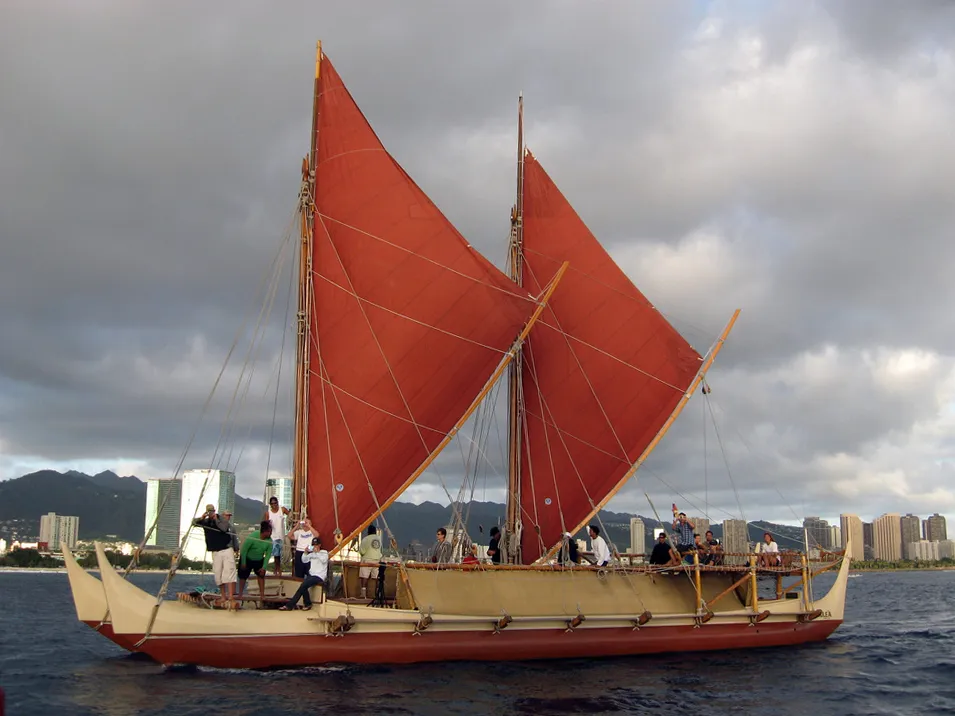
About 3,000 years ago people from the Taiwan–Philippines region (the Lapita culture) sailed double-hulled canoes through Melanesia to Fiji, Tonga and Samoa. Their descendants, the Polynesians, sailed into the open ocean, finding their way by stars, sun, swells and birds.
A 2010 study re-examining some 1,400 radiocarbon dates found that after reaching the Society Islands in the 1000s they spread to the far corners of East Polynesia in a short burst around 1190–1290 — reaching Hawaiʻi, Rapa Nui and, in the far south-west, Aotearoa (New Zealand) around 1230–1280. The journey begun by the people who left Africa had reached every large habitable land but Antarctica.