World · Historyc. 300,000 years ago – 130011 events

The Human Journey

How modern humans, who appeared in Africa some 300,000 years ago, left Africa, met the Neanderthals, crossed the sea to Australia and the ice-age Bering land bridge to the Americas, and finally reached the remotest islands of the Pacific
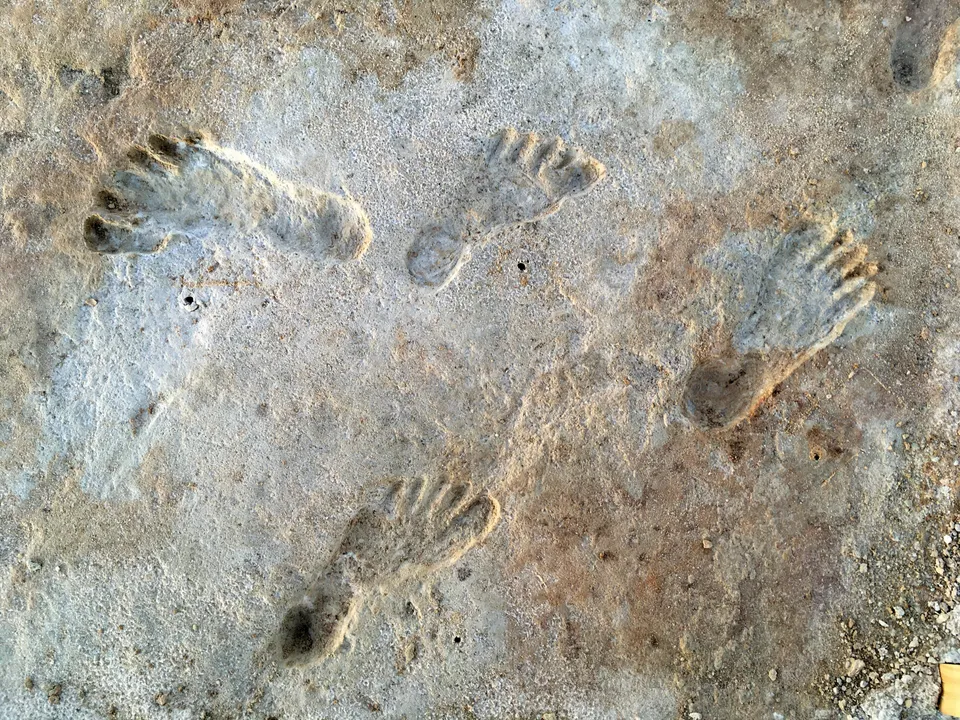
뉴멕시코 화이트샌즈의 사람 발자국 화석 — 빙하기의 호숫가를 걸어간 사람들 (2만 3천–2만 1천 년 전)

US Geological Service · Public domain · Source

The theme on the map

OpenFreeMap © OpenMapTiles © OpenStreetMap contributors

11 events in this theme

  1. c. 700,000 years ago – 8000 BCPalaeolithic Age (Korean Peninsula)

    People lived on the Korean Peninsula from about 700,000 years ago, using chipped stone tools and moving about to hunt and gather.

  2. c. 300,000 years agoEmergence of Homo sapiens

    About 300,000 years ago Homo sapiens — our own species — appeared in Africa. The oldest known fossils come from Jebel Irhoud in Morocco.

  3. c. 60,000 years ago – c. 45,000 years agoOut of Africa

    About 60,000 to 50,000 years ago one branch of modern humans left Africa and spread into Asia. Over tens of thousands of years their descendants reached Australia, Europe and the Americas.

  4. c. 50,000 years agoFirst peoples of Australia

    In the ice age Australia and New Guinea formed one continent, Sahul. People reached it from Southeast Asia by crossing the sea several times — by about 50,000 years ago at the latest — in what is counted among the oldest sea voyages.

  5. c. 50,000 years ago – c. 43,500 years agoMeeting the Neanderthals and Denisovans

    Modern humans who left Africa had children with Neanderthals in western Asia about 50,000 to 43,000 years ago, and mixed with Denisovans in Asia. Neanderthals contributed 1–2% of the genes of people outside Africa today.

  6. c. 45,000 years agoModern humans in Europe

    Modern humans entered Europe about 45,000 years ago and lived alongside Neanderthals for several thousand years. About 36,000 years ago they painted animals in Chauvet Cave in France.

  7. c. 40,000 years agoModern humans in East Asia

    Modern humans lived in northern China (Tianyuan Cave) about 40,000 years ago, and from about that time an Upper Palaeolithic culture of blades and tanged points spread across Korea and the Japanese islands.

  8. c. 26,000 years ago – c. 19,000 years agoLast Glacial Maximum

    Ice was at its greatest about 26,000 to 19,000 years ago. Thick ice sheets covered North America and northern Europe, and seas some 120 m lower than today left Beringia, the Yellow Sea plain, Sunda and Doggerland as dry land.

  9. People from Siberia crossed the ice-age Bering land bridge into the Americas, reaching Monte Verde in Chile by about 14,500 years ago. Footprints at White Sands, New Mexico, are dated to 23,000–21,000 years ago.

  10. c. 11,700 years agoEnd of the last ice age

    About 11,700 years ago the last ice age ended and the present warm epoch, the Holocene, began. Meltwater raised the sea and drowned Beringia, the Yellow Sea plain and Doggerland, making today’s coastlines.

  11. Polynesians voyaging across the Pacific reached Hawaiʻi, Rapa Nui (Easter Island) and Aotearoa (New Zealand) in the 1200s. Aotearoa was the last large land that people reached.