Politics5 January – 21 August 1968

Prague Spring

Also called: Warsaw Pact invasion of Czechoslovakia

Czechoslovakia’s Dubček launched reforms, including press freedom, under the banner of “socialism with a human face”, but Warsaw Pact forces led by the Soviet Union invaded and crushed them.
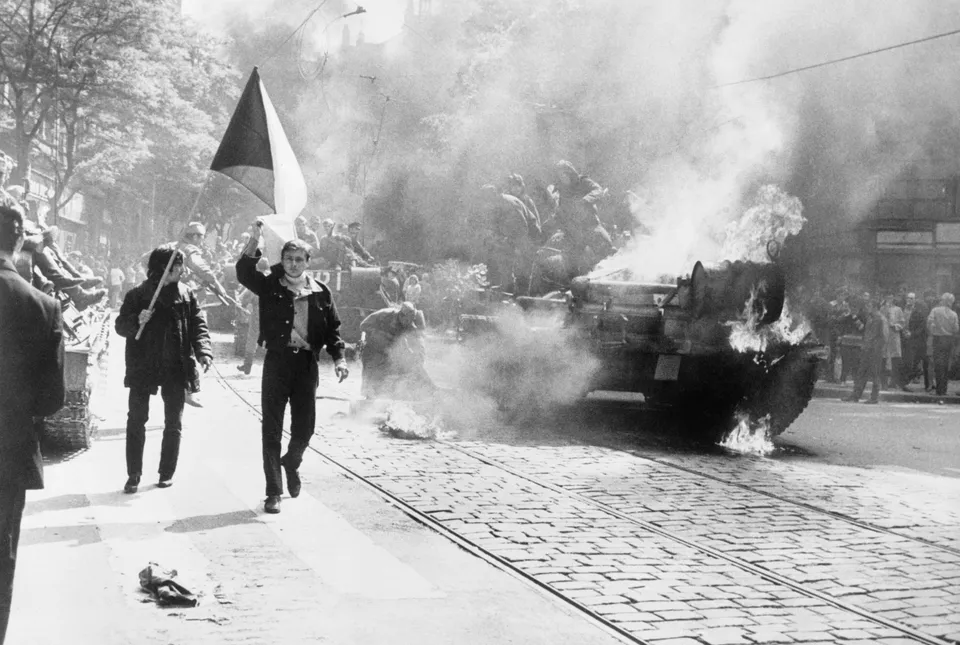
Prague citizens carry their national flag past a burning tank during the Soviet invasion, August 1968

The Central Intelligence Agency · Public domain · Source

Becoming first secretary of the Communist Party in January 1968, Dubček abolished censorship and promised freedom of speech and assembly and economic reform. Citizens welcomed the changes in lively public debate.

Fearing that reform would spread across Eastern Europe, the Soviet Union sent hundreds of thousands of Warsaw Pact troops and tanks into Czechoslovakia on the night of 20–21 August. Dubček was taken to Moscow and later removed. The Soviets proclaimed the Brezhnev Doctrine: the sovereignty of one socialist state could be limited in the interest of the socialist camp as a whole.

The map in 1968

OpenFreeMap © OpenMapTiles © OpenStreetMap contributors

States and rulers at the time
Czechoslovakia · invaded
Soviet Union · invader — Leader Leonid Brezhnev

People

  • Alexander Dubček1921 – 1992

    leader · First Secretary of the Czechoslovak Communist Party (1968–1969) who led the Prague Spring reforms under the banner of “socialism with a human face”

  • Leonid Brezhnev1906 – 1982

    related figure · Soviet leader (1964–1982) who crushed the Prague Spring (the Brezhnev Doctrine) and presided over both détente and the invasion of Afghanistan

Before and after

Earlier
1938 Munich Agreement

Themes that include this event

  • The Cold War1945 – 1991

    From Yalta to the dissolution of the Soviet Union — half a century in which two blocs led by the US and the USSR divided the world