Ragnarök — The Fate of the Gods
Also called: Ragnarok, Ragnarøkkr, Twilight of the Gods, Götterdämmerung, Fimbulwinter, Surtr
A legend handed down over the centuries.
The Norse myth of the end of the world, told in Völuspá (Prophecy of the Seeress) in the Poetic Edda and in Snorri’s Prose Edda. After three winters without summer, the bound Fenrir and Loki break free; gods and giants fight their last battle, Odin, Thor and Freyr die, and Surtr’s fire engulfs the world.
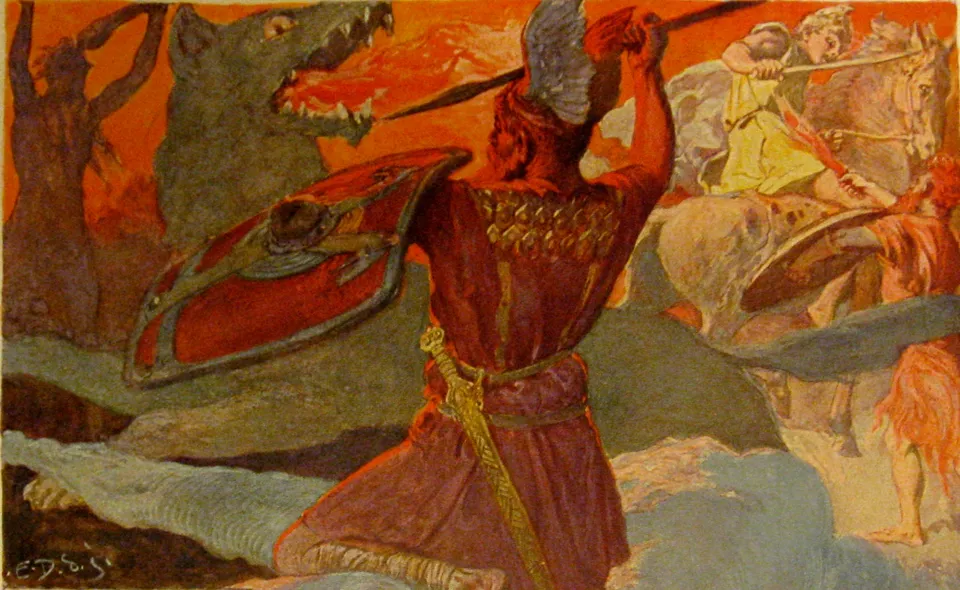
Emil Doepler · Public domain · Source
This Norse myth of the end of the world is told in the Eddic poems Völuspá and Vafþrúðnismál and in Gylfaginning of Snorri Sturluson’s Prose Edda. Ragnarök means “the fate of the gods”; Snorri also wrote ragnarøkkr, “twilight of the gods”. Because the sources were written in the Christian 13th century, scholars disagree over how far biblical accounts of the end of the world influenced them.
First comes Fimbulvetr, three winters with no summer between, and brothers kill one another as the world falls into chaos. Wolves swallow the sun and moon, the earth shakes, and Fenrir and Loki break loose. Jörmungandr comes ashore, the ship Naglfar, made of dead men’s nails, sets sail, and the fire giant Surtr comes out of Muspelheim. Heimdall blows the horn Gjallarhorn to rouse the gods.
In the battle on the plain of Vígríðr, Odin is swallowed by Fenrir, and his son Víðarr avenges him by tearing the wolf’s jaws apart. Thor kills Jörmungandr but staggers nine steps and falls dead from its venom. Freyr, who had given away his sword, falls to Surtr; Týr and the hound Garmr, and Loki and Heimdall, kill each other. At last Surtr’s fire burns the whole world, and the earth sinks into the sea.