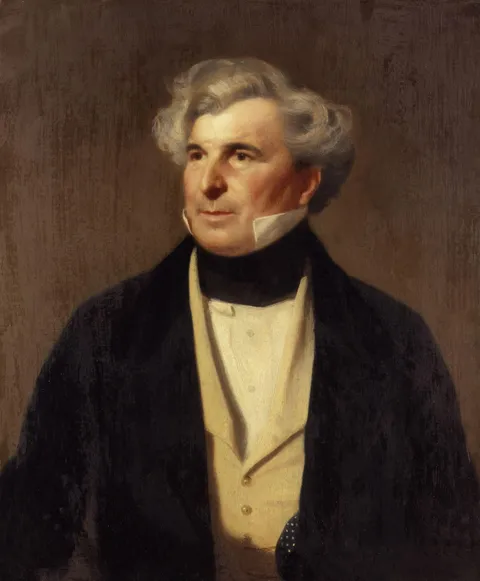
Ross’s Antarctic Expedition
With the Erebus and Terror the Briton James Clark Ross sailed into a deep sea of Antarctica (the Ross Sea) and found a smoking volcano, Mount Erebus, and a vast wall of ice barring the sea (the Ross Ice Shelf).
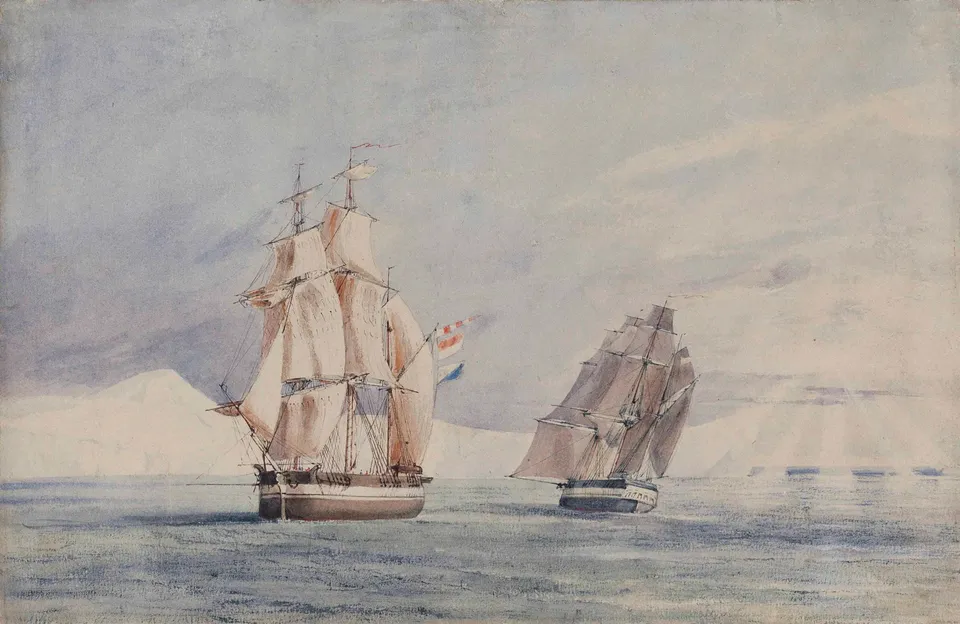
John Edward Davis · Public domain · Source
Setting out from Britain in 1839 to seek the South Magnetic Pole, Ross pushed through a thick belt of pack ice in January 1841 into open sea to the south. He saw the mountains of Victoria Land and on 27 January found an active volcano, smoking, which he named Mount Erebus after his ship. To its east a cliff of ice more than 50 m high ran for hundreds of kilometres, and the ships could go no further — the wall now called the Ross Ice Shelf.
The next year he reached 78°10′ S, a record unbroken for nearly sixty years. Both ships vanished with Franklin’s expedition seeking the Northwest Passage in 1845; their wrecks were found in Canadian Arctic waters in 2014 and 2016.