Conflict8 February 1904 – 5 September 1905

Russo-Japanese War

Japan and Russia fought over Korea and Manchuria. Victorious Japan won recognition of its exclusive control over Korea in the Treaty of Portsmouth.
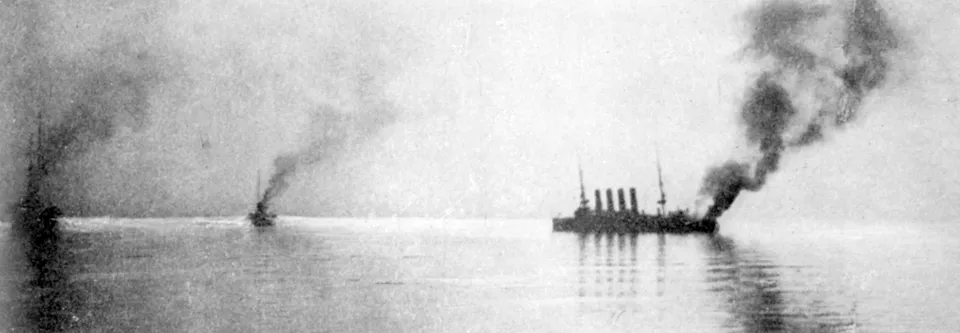
Russian cruiser Varyag burning in Chemulpo harbour, February 1904, at the war's outbreak

Uncredited - probably Robert L. Dunn · Public domain · Source

Korea declared neutrality in January 1904, but on 8 February Japan attacked the Russian fleet at Port Arthur and off Jemulpo and occupied Seoul. Japan won at Liaoyang, Port Arthur and Mukden, and in May 1905 destroyed Russia’s Baltic Fleet off Tsushima.

During the war Japan forced the Korea–Japan Protocol and the First Korea–Japan Agreement on Korea and secretly incorporated Dokdo into Shimane Prefecture. The United States (the Taft–Katsura memorandum) and Britain (the second Anglo-Japanese Alliance) also acknowledged Japanese control of Korea. The war ended with the Treaty of Portsmouth in September 1905.

The map in 1904

OpenFreeMap © OpenMapTiles © OpenStreetMap contributors

States and rulers at the time
Japan · victor — Emperor Meiji
Russia · defeated
Korean Empire — Gojong
Qing — Guangxu Emperor
Places
Jemulpo (Incheon)

People

  • Gojong1852 – 1919

    related figure · Twenty-sixth king of Joseon and first emperor of the Korean Empire

1 part of this event

  1. Through American mediation Japan and Russia signed a treaty ending their war; Russia recognized Japan’s paramount political, military and economic interests in Korea.

Before and after

Themes that include this event

  • Imperialism and the Partition of the World1839 – 1914

    From the Tanzimat to Sarajevo — seventy-five years in which the powers carved up West Asia, India, Southeast Asia, Africa and the Pacific, and the peoples there answered with reform and resistance