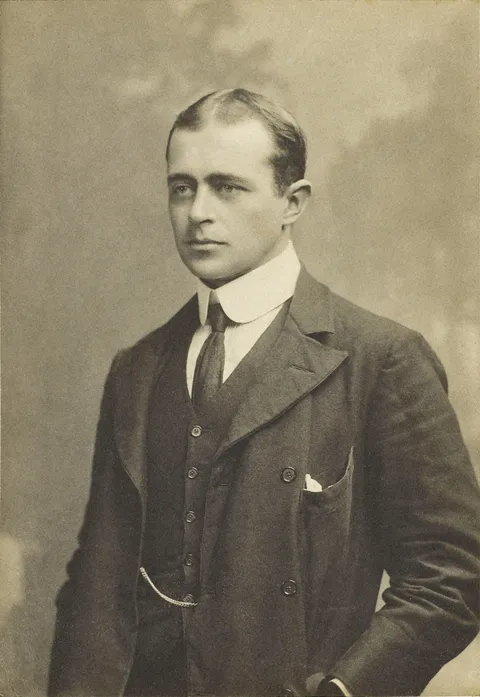
Scott’s South Pole Expedition
The British party of five led by Robert Scott reached the South Pole on 17 January 1912 to find Amundsen’s Norwegian flag already there. All five died of cold and hunger on the way back.
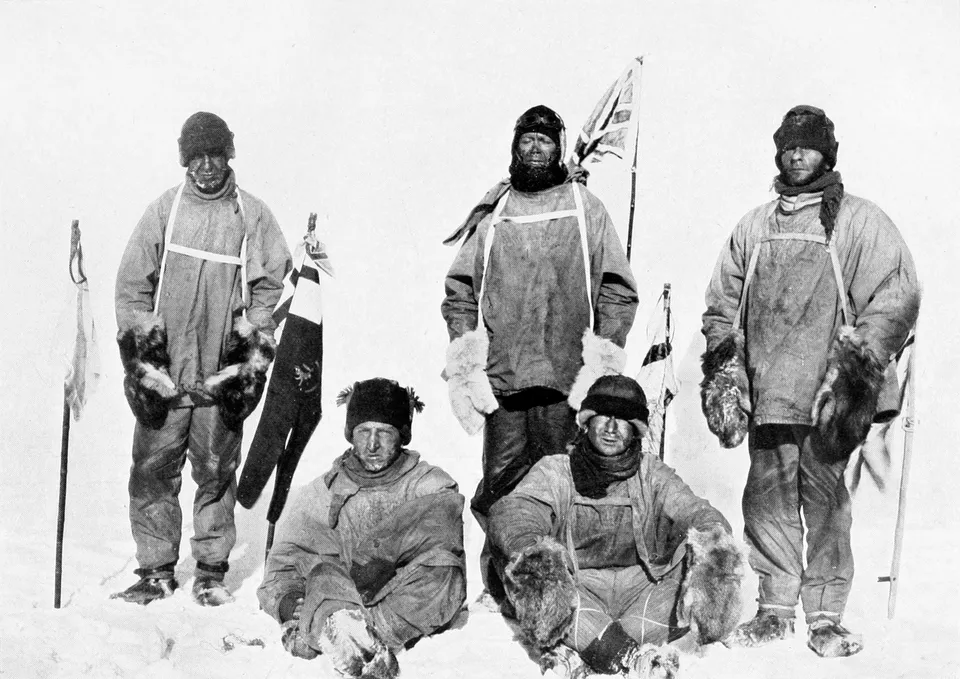
Henry Bowers · Public domain · Source
Leaving Britain in the Terra Nova in 1910, Scott set up his base at Cape Evans on Ross Island. In November 1911 he set out for the pole using ponies, motor sledges and dogs, but the ponies and motors failed in the cold, and on the final stretch five men hauled the sledges themselves. Reaching the pole on 17 January 1912, they found the tent and flag Amundsen had left a month before.
The return was a long ordeal of cold and hunger. Edgar Evans died in February; in March Lawrence Oates, crippled by frostbite, walked out into a blizzard so as not to hold the others back. Scott, Wilson and Bowers died in their tent at the end of March, 18 km short of a supply depot. The search party that found them in November recovered Scott’s diary — and 16 kg of rocks the men had hauled to the end. The Glossopteris fossils among them became evidence that Antarctica had once been joined to warmer lands.