Scylla and Charybdis
Also called: Scylla, Charybdis
A legend handed down over the centuries.
A Greek myth told in Book 12 of the Odyssey. On one side of a narrow strait lurked the six-headed monster Scylla, on the other the whirlpool Charybdis that swallowed the sea. To avoid losing his whole ship, Odysseus hugged Scylla’s side and lost six men.
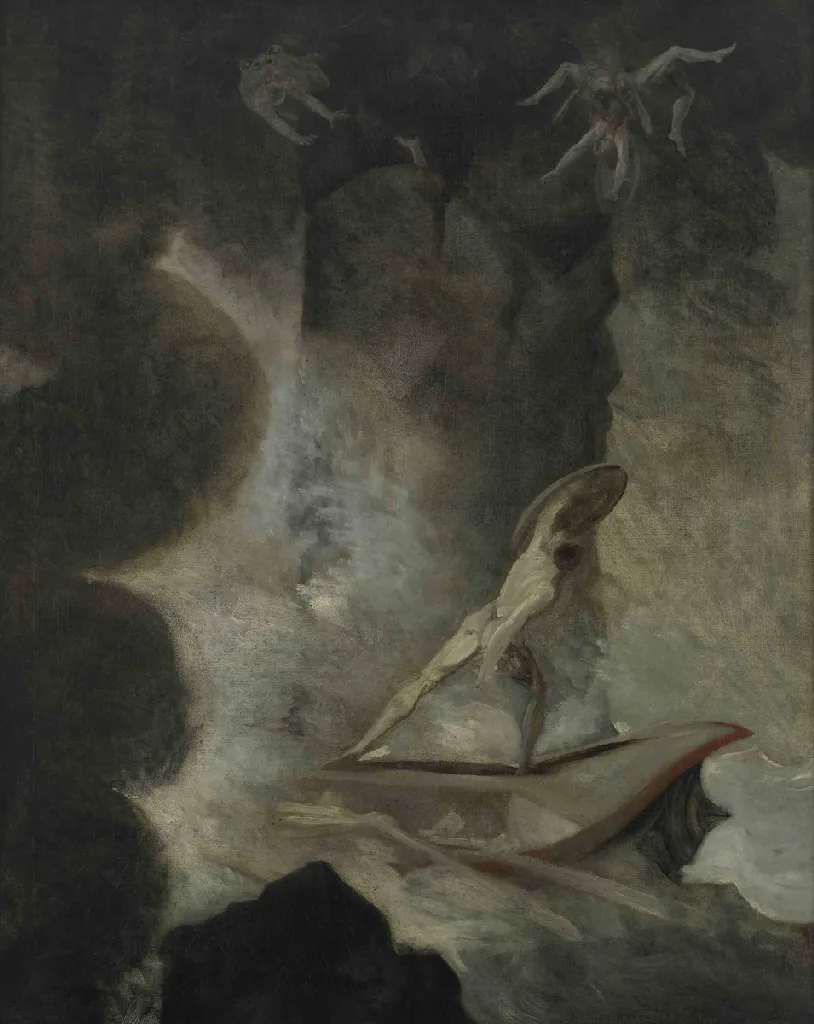
Henry Fuseli · Public domain · Source
This Greek myth is told in Book 12 of Homer’s Odyssey. After passing the Sirens the crew reached a narrow strait between two rocks. In a cave in one cliff lived Scylla, a monster with six heads on long necks who snatched six men at a time from passing ships; opposite, beneath a fig tree, Charybdis sucked down the sea three times a day and spewed it out again, able to swallow a whole ship.
As Circe had advised, Odysseus steered away from Charybdis and close to Scylla, and while they watched the whirlpool Scylla seized six of his men. Since antiquity the place has been identified with the Strait of Messina between the Italian peninsula and Sicily. "Between Scylla and Charybdis" came to mean a choice between two dangers.