Sennacherib’s Invasion of Judah and Siege of Jerusalem
Also called: Siege of Lachish, Hezekiah’s Tunnel
In 701 BCE Sennacherib of Assyria invaded rebellious Judah, destroyed 46 fortified towns including Lachish and besieged Jerusalem. King Hezekiah paid heavy tribute, but Jerusalem did not fall.
Mike Peel · CC BY-SA 4.0 · Source
When Sargon II of Assyria died, King Hezekiah of Judah allied with Egypt and stopped paying tribute. Preparing for a siege, he had a 533 m tunnel cut through the rock from the Gihon Spring outside the walls to the Pool of Siloam inside; the Siloam Inscription, recording the moment the two teams of diggers met, was found in 1880.
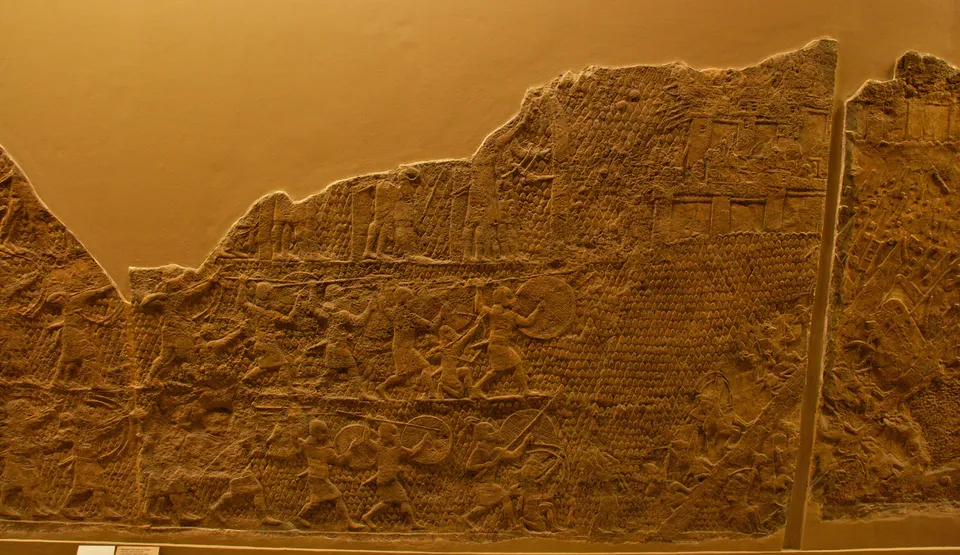
In 701 BCE Sennacherib invaded Judah and took Lachish, its second fortress, carving the siege on the walls of his palace at Nineveh (now in the British Museum). His prism (the Taylor Prism) records that he took 46 walled towns of Judah and shut Hezekiah up in Jerusalem “like a bird in a cage”. Hezekiah paid a heavy tribute, including thirty talents of gold.
Jerusalem itself was never taken. The Second Book of Kings says the angel of the Lord struck down 185,000 Assyrian soldiers in a single night; the Assyrian records give no reason for the withdrawal. It is a rare case of one event recorded by both attacker and defender.