Yi Hwang’s Seonghak sipdo
Yi Hwang presented the Seonghak sipdo (Ten Diagrams on Sage Learning), summarising Neo-Confucianism in ten diagrams, to King Seonjo, who had come to the throne at sixteen.
Yi Hwang studied Zhu Xi’s teachings deeply and systematised Joseon Neo-Confucianism. Stressing principle (i), he held that principle and material force (gi) both issue forth, and debated the Four Beginnings and Seven Emotions with Gi Dae-seung. Preferring scholarship and teaching to office, he opened the Dosan Seodang in Andong.
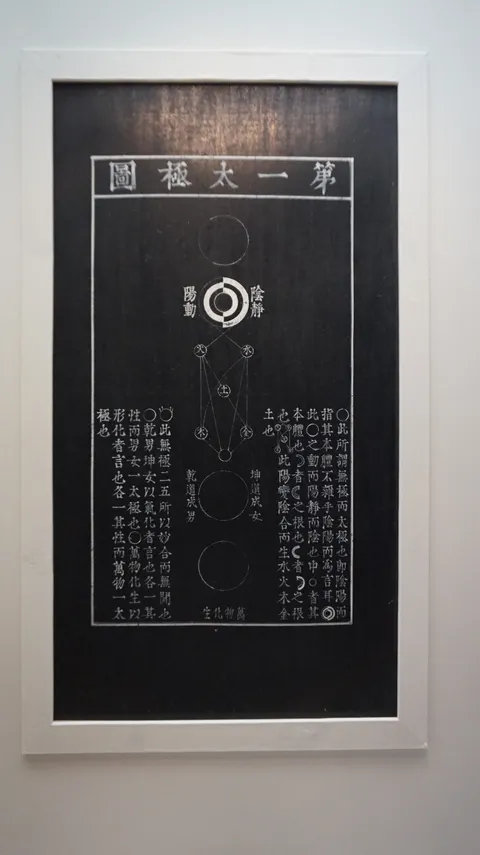
Presented in 1568, the Seonghak sipdo argued through ten diagrams with commentary — on the Supreme Ultimate, the Western Inscription, the Elementary Learning, the Great Learning and others — that a ruler must himself learn and practise sage learning to become a sage king. His school passed to the Yeongnam school of Kim Seong-il, Ryu Seong-ryong and others, and after the Imjin War it also influenced Japanese Neo-Confucianism.