Rock-carved Buddha Triad, Yonghyeon-ri, Seosan
Also called: Smile of Baekje, Seosan Maae Samjonbul
A Baekje triad carved on a rock face at Seosan. The generous, gentle smile of its central Buddha has earned it the name "the smile of Baekje".
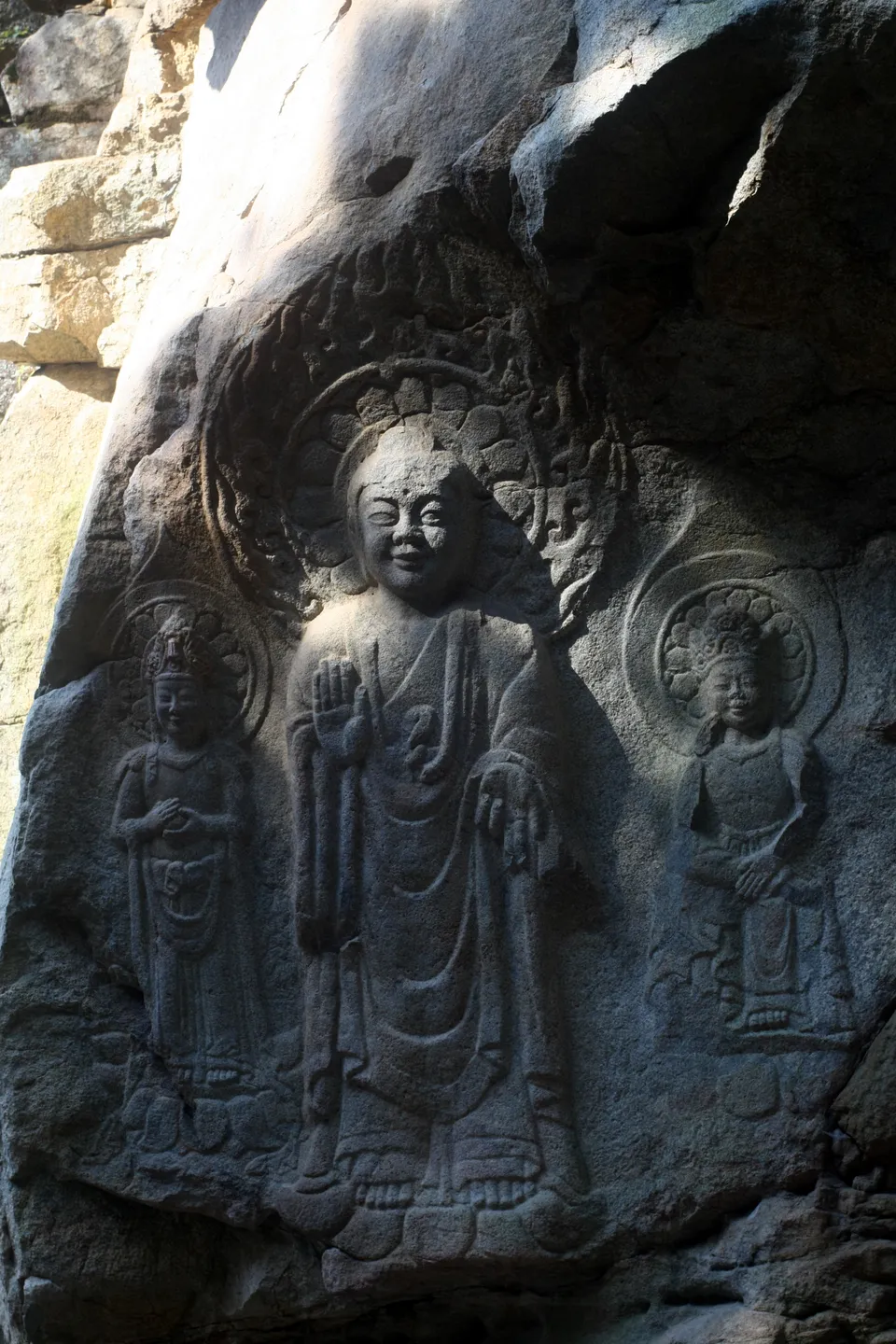
Dalgial · CC BY-SA 3.0 · Source
This maaebul (rock-carved Buddha) is cut into a great rock wall in a valley of Mount Gaya. A standing Buddha in the centre is flanked by a standing bodhisattva on one side and a pensive bodhisattva on the other. The smile on the round, full face seems to change with the angle of the sun, earning it the name "the smile of Baekje" — the very image of the soft, gentle grace of Baekje sculpture.
Seosan and Taean lay where Baekje’s sea route to China began, so it is thought to have been carved by those who travelled that road. It dates from the late 6th to early 7th century and became known to scholars in 1959. It is a National Treasure, and appears in exam questions on Baekje Buddhas.