Fall of Atlanta and Sherman’s March to the Sea
Also called: Atlanta campaign, March to the Sea, Savannah campaign
Sherman’s Union army took Atlanta, the South’s rail hub, then marched across Georgia to Savannah on the Atlantic, destroying railways, farms and supplies along the way.
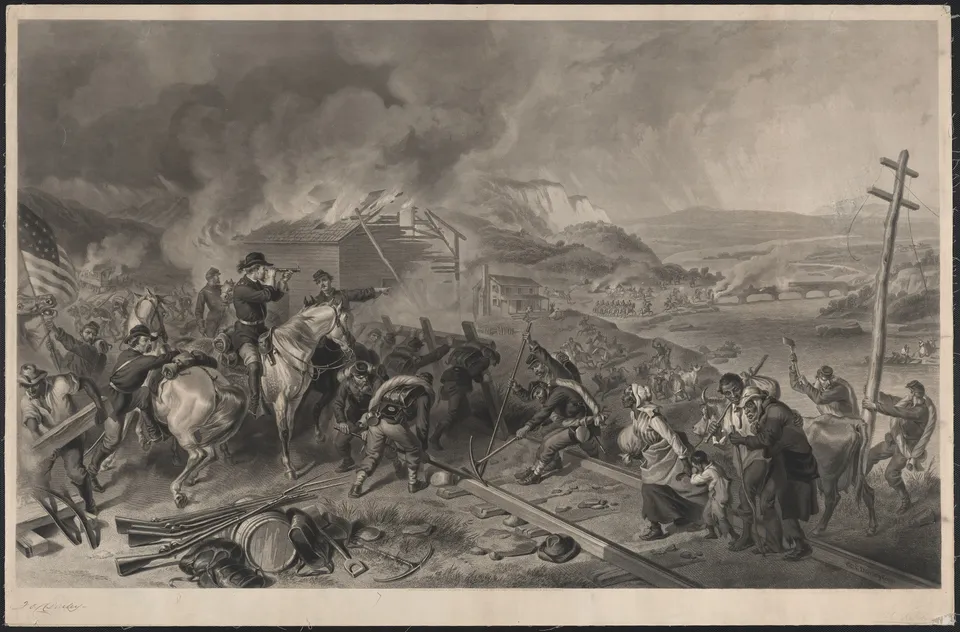
Ritchie, Alexander Hay, 1822-1895, engraver; Darley, Felix Octavius Carr, 1822-1888, artist · Public domain · Source
Made general-in-chief in March 1864, Grant pinned Lee down in Virginia while William T. Sherman invaded Georgia. After four months of fighting Sherman took Atlanta on 2 September. Coming when a war-weary North seemed likely to deny Lincoln a second term, the victory did much to win him the November election.
On 15 November Sherman burned Atlanta’s military facilities and, cutting loose from his supply lines, led some 62,000 men about 450 km to Savannah, which he entered on 21 December. Along a swath tens of kilometres wide his army tore up railways and took or destroyed crops and livestock, and thousands of enslaved people followed it to freedom. Sherman telegraphed Lincoln to offer Savannah as a “Christmas gift”. This “hard war” broke the South’s means and will to fight, and left a long and bitter memory there.