Siege of Osaka
Also called: Osaka Campaign, Ōsaka no jin, Winter Campaign, Summer Campaign, Genna enbu
In two campaigns, winter and summer, Tokugawa Ieyasu attacked Osaka Castle and destroyed the Toyotomi. The great wars that had run since the Sengoku age ended — the “Genna peace” (Genna enbu), when weapons were laid down.
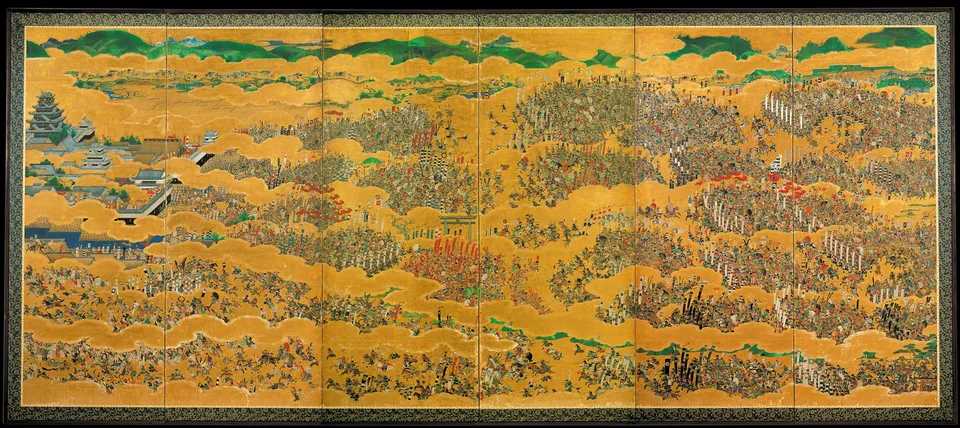
Unknown author · Public domain · Source
Even after Sekigahara, Hideyoshi’s son Hideyori remained in Osaka Castle as a daimyo of some 650,000 koku. In 1614 the inscription “May the state be peaceful and prosperous” (kokka ankō, kunshin hōraku) on the bell of the Hōkō-ji, rebuilt by Hideyori, was attacked as splitting Ieyasu’s name and wishing prosperity to the Toyotomi. That winter Ieyasu surrounded Osaka Castle with an army said to number around 200,000, and the Toyotomi side, swelled with masterless samurai, held out with defences such as Sanada Nobushige’s (Yukimura’s) Sanada-maru (the winter campaign).
When the outer moats were filled in under the peace terms, Ieyasu marched again in 1615 (the summer campaign). The Toyotomi forces fought outside the walls, and Sanada Nobushige drove right up to Ieyasu’s headquarters before he was killed. On 3 June the castle burned, and the next day Hideyori and his mother Yodo-dono took their own lives, ending the Toyotomi line. The shogunate soon changed the era name to Genna and bound the daimyo with the one-castle-per-province order and the Laws for Military Houses.