Culture5th – 6th century
Silla Pottery and Clay Figurines
Also called: Long-necked jar with figurines
Hard grey-blue stoneware fired at high temperatures — tall pedestal dishes, long-necked jars, and sometimes small clay figurines (towu) of people and animals.
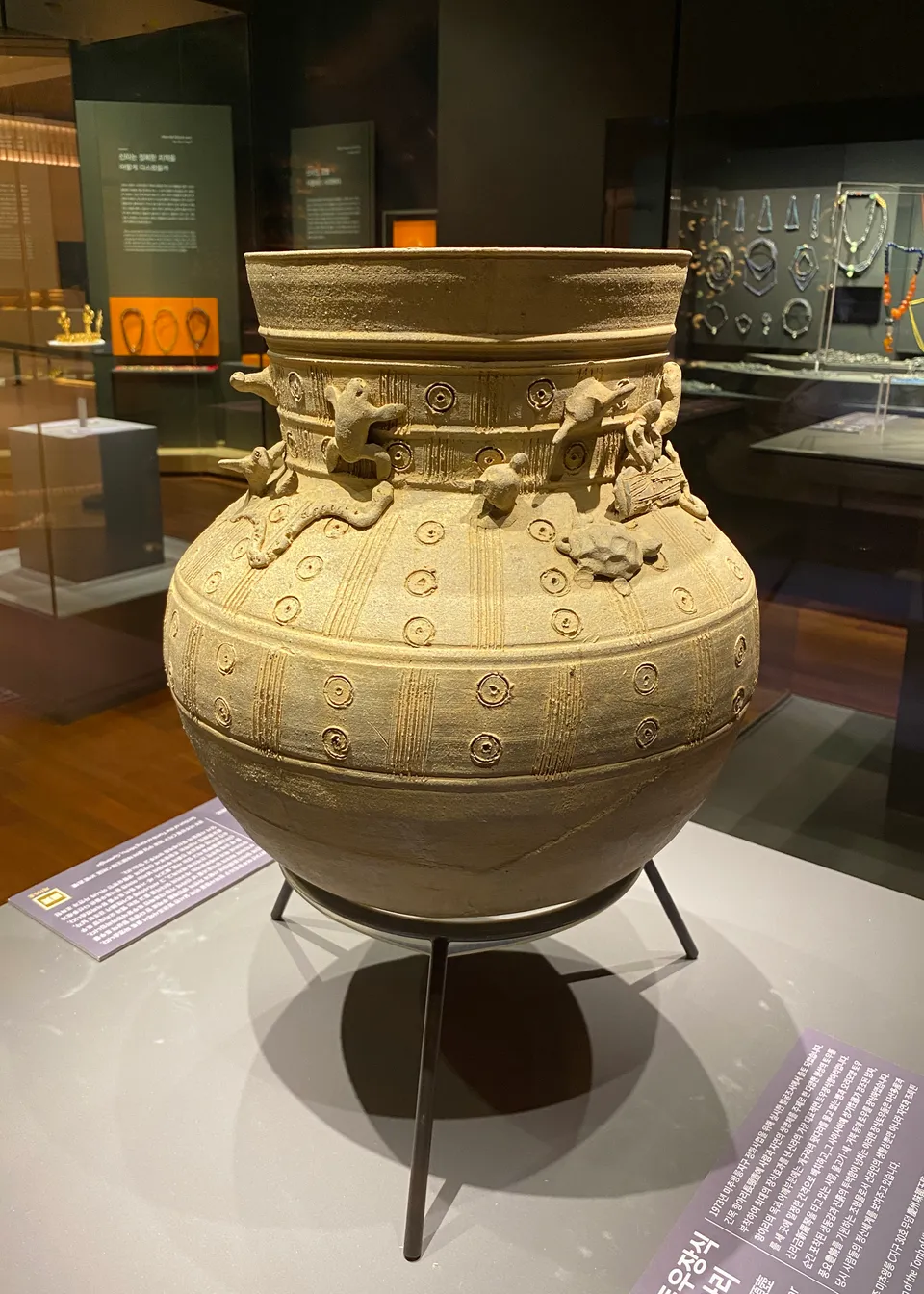
In the Three Kingdoms period, potters fired hard, grey-blue stoneware in tunnel kilns at over 1,000°C. Silla pottery is typified by high-footed dishes, long-necked jars and vessel stands, their feet pierced with staggered square openings. It resembles Gaya pottery, which in turn influenced Japanese Sue ware.
Small clay figurines (towu) were sometimes attached to jars. The long-necked jars with figurines from Gyeongju (National Treasure) carry musicians, lovers and a snake biting a frog — glimpses of Silla life and prayers for fertility.