Conflict1519 – 13 August 1521

Spanish Conquest of the Aztec Empire

Also called: Fall of Tenochtitlan

Spain’s Hernán Cortés, allied with Indigenous peoples hostile to the Aztecs, took the capital Tenochtitlan. The Aztec Empire fell and New Spain (Mexico) was founded.
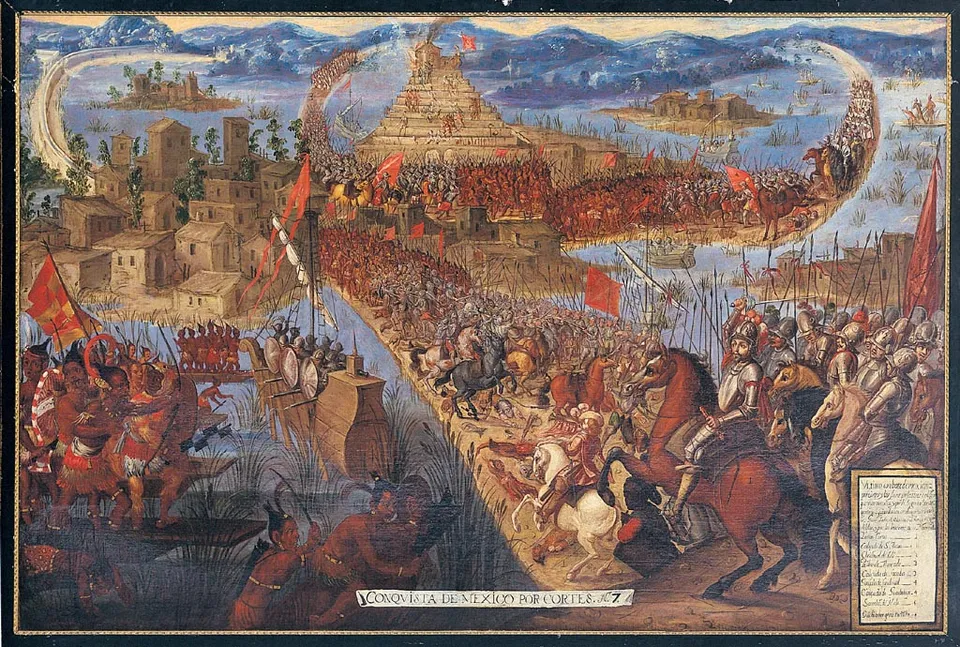
The Conquest of Tenochtitlan — from a late 17th-century Conquest of Mexico series

Unknown author · Public domain · Source

Landing on the Mexican coast from Cuba in 1519 with some 500 men, Cortés allied with Tlaxcala and others who resented Aztec rule, entered Tenochtitlan in November and took the emperor Moctezuma II hostage. When the city rose in June 1520 he fled with heavy losses (La Noche Triste), but returned with tens of thousands of Indigenous allies and besieged the lake city. With smallpox from Europe raging inside, Tenochtitlan fell on 13 August 1521. Mexico City was built on its ruins as the centre of the Viceroyalty of New Spain. Horses and steel, Indigenous allies and, above all, epidemic disease were the main causes of the conquest.

The map in 1519

OpenFreeMap © OpenMapTiles © OpenStreetMap contributors

States at the time
Spain · conqueror
Aztec Empire · fell
Viceroyalty of New Spain · established
Places
Tenochtitlan

People

  • Hernán Cortés1485 – 1547

    commander · Spanish conquistador who, with Indigenous allies, overthrew the Aztec Empire in 1519–1521

  • Moctezuma II1520

    monarch · Aztec emperor who received Cortés in his capital, was taken hostage and died in the turmoil of 1520

  • Charles V1500 – 1558

    related figure · King of Spain (as Charles I) and Holy Roman Emperor, who sponsored Magellan’s voyage and under whom the Aztec and Inca empires were conquered

Before and after

Themes that include this event

  • Turkic-Islamic Empires and Other Civilizations1000 – 1533

    From the Ghaznavid raids on India to the Mughal Empire and Suleiman I — five centuries in which Turkic-led Islamic empires took western Asia and India, while Africa, Southeast Asia and the Americas raised civilisations of their own

  • The Age of Discovery1415 – 1600

    From Ceuta to the Manila galleons — two centuries in which European ships crossed the oceans and bound the world together by sea