Thirteenth Amendment — Abolition of Slavery
Also called: Thirteenth Amendment to the United States Constitution, 13th Amendment
Congress passed a constitutional amendment banning slavery and involuntary servitude, which took effect on ratification by the states in December 1865, ending slavery throughout the United States.
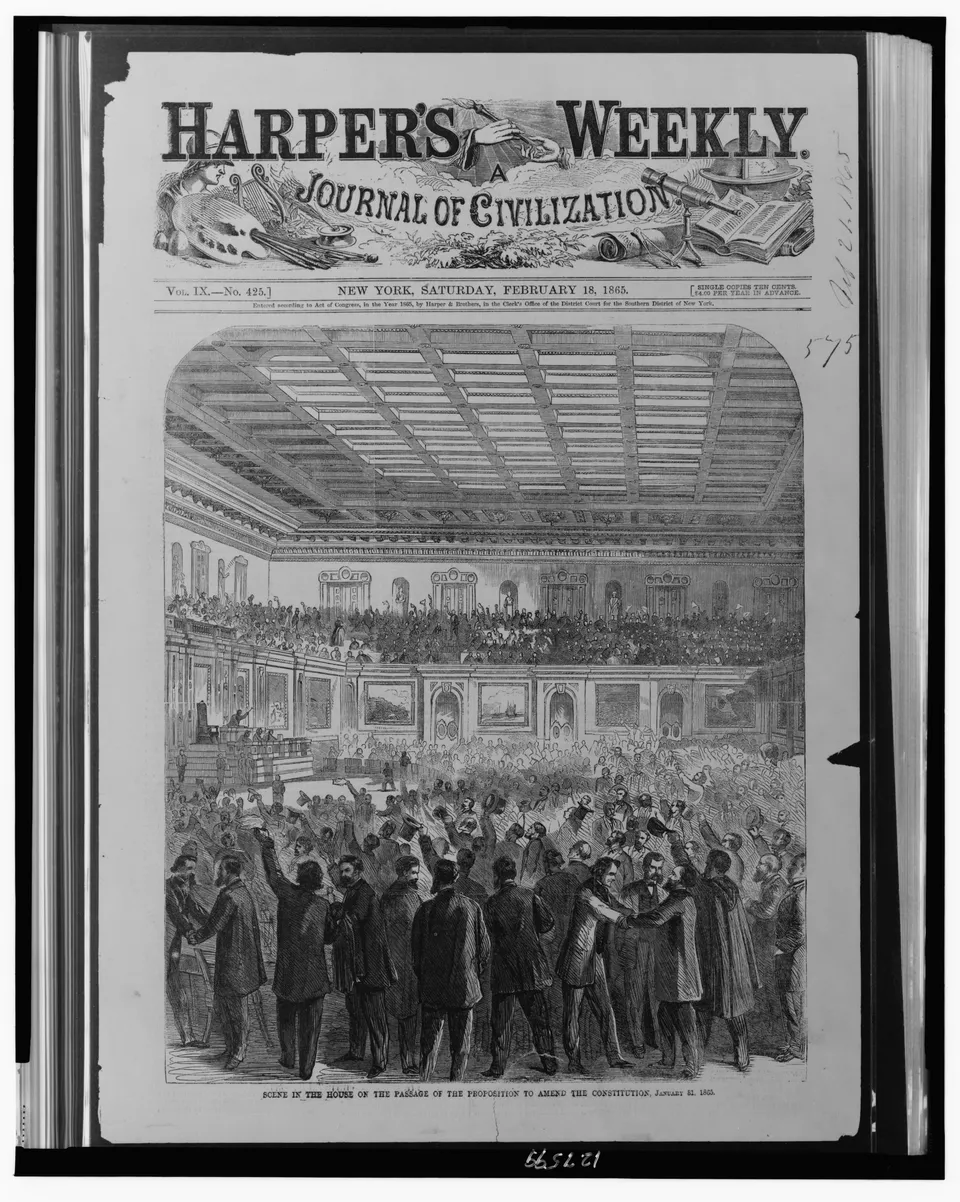
Miscellaneous Items in High Demand, PPOC, Library of Congress · Public domain · Source
Because the Emancipation Proclamation was a war measure, it was uncertain whether it would hold after the war or what would become of slaves in the border states. The amendment passed the Senate in April 1864 but stalled in the House; after a determined push by the re-elected Lincoln, the House passed it on 31 January 1865 by 119 votes to 56, and the chamber, Black citizens in the galleries among them, erupted in cheers.
“Neither slavery nor involuntary servitude, except as a punishment for crime whereof the party shall have been duly convicted, shall exist within the United States, or any place subject to their jurisdiction.” On 6 December 1865, after Lincoln’s death, Georgia became the 27th state to ratify, completing the three-quarters needed. Some four million enslaved people were free, and the Reconstruction amendments on citizenship (14th) and voting (15th) followed. The exception for punishment of crime, however, was later used to justify forced labour such as convict leasing.