The Titanomachy — War of the Titans
Also called: Titanomachia, War of the Titans
A legend handed down over the centuries.
A Greek myth told in Hesiod’s Theogony. Zeus and his siblings on Mount Olympus fought Cronus and the Titans on Mount Othrys for ten years. With the thunderbolt forged by the Cyclopes and the help of the Hundred-Handers, Zeus won and shut the Titans in Tartarus.
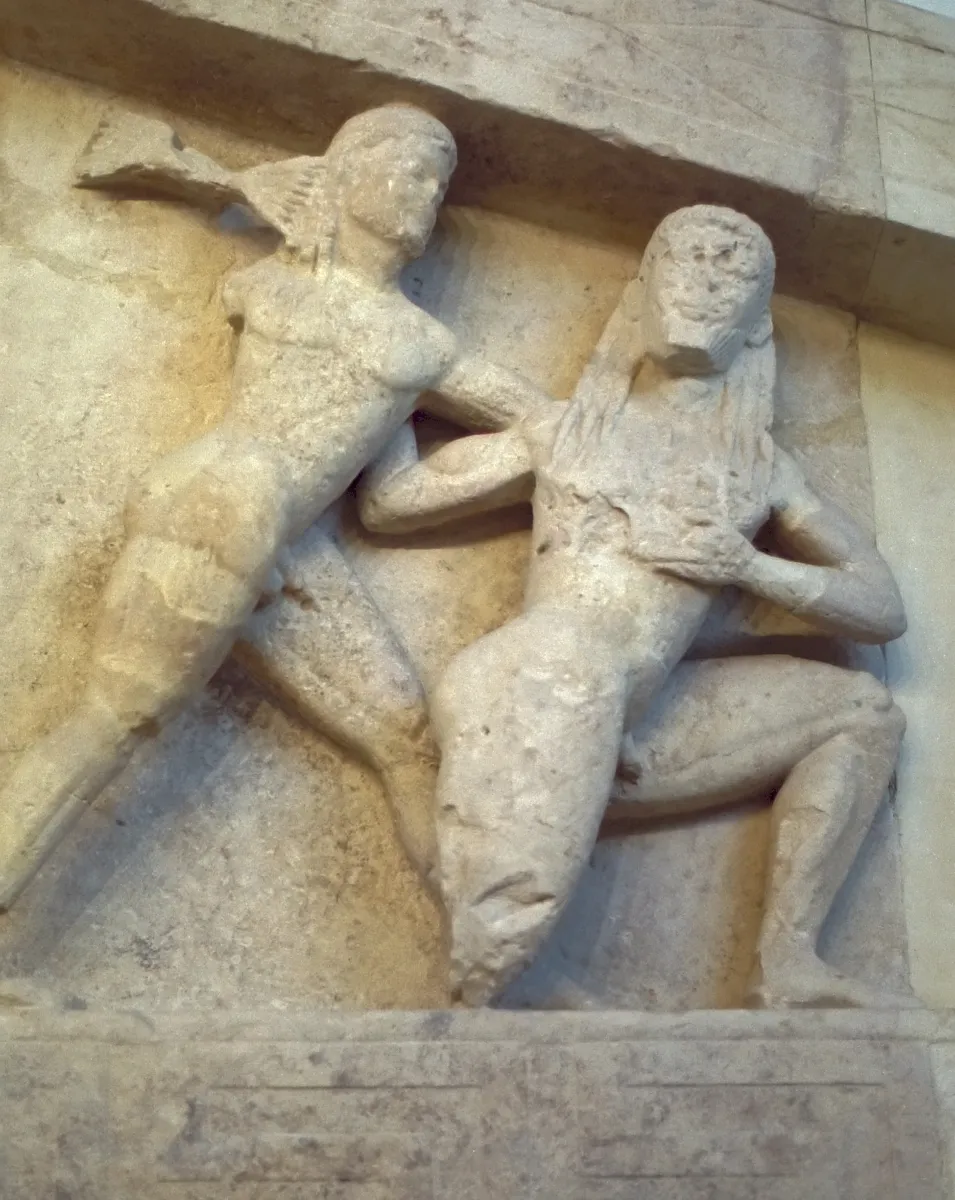
Zde · CC BY-SA 4.0 · Source
This Greek myth is told in Hesiod’s Theogony (an epic called the Titanomachy survives only in fragments). Zeus and his siblings held Mount Olympus, Cronus and the Titans Mount Othrys, and for ten years neither side could win. On Gaia’s advice Zeus freed the Cyclopes and the Hundred-Handers imprisoned beneath the earth, and the Cyclopes gave him thunder and the thunderbolt.
Zeus’ thunderbolts set land and sea boiling, and the Hundred-Handers drove back the Titans with rocks hurled from their hundred arms. The defeated Titans were shut in Tartarus, deep beneath the earth, with the Hundred-Handers guarding its gates, and the Titan Atlas was condemned to hold up the sky at the end of the world. The Theogony goes on to tell how Zeus struck down even Typhon, the monster born of Gaia, after which the gods made Zeus their king.