Treaty of Karlowitz
Also called: Peace of Karlowitz, Treaty of Carlowitz
Defeated by the Holy League, the Ottoman Empire ceded Hungary, Transylvania and other lands to Austria — its first great loss of territory by treaty, often taken as the start of its decline.
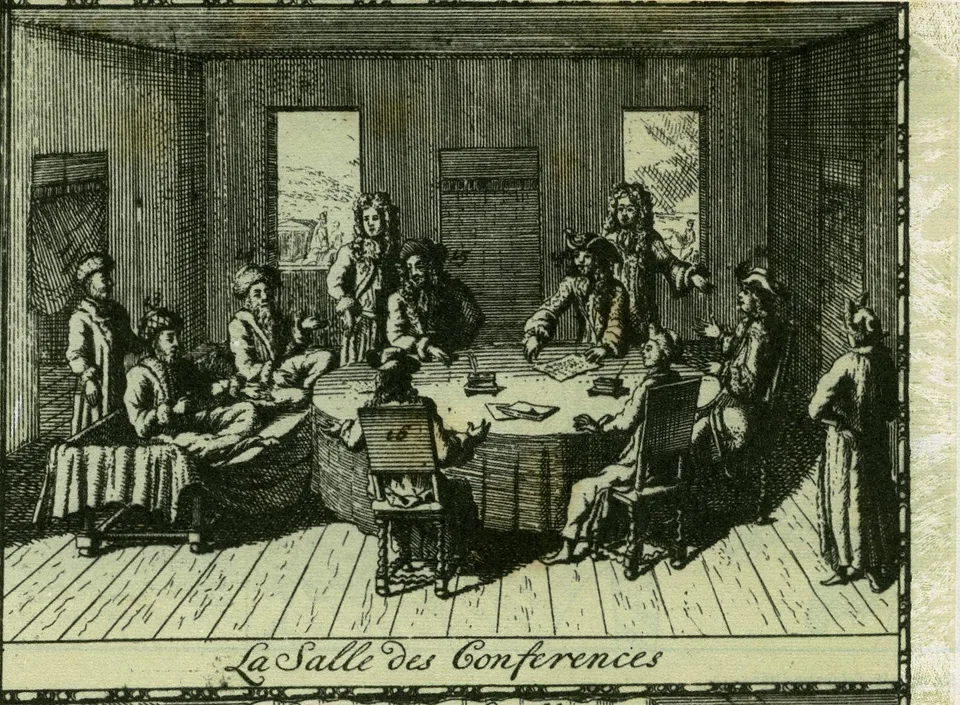
unknown person from Low Countries · Public domain · Source
In the sixteen-year War of the Holy League that followed the failed siege of Vienna, the Ottomans lost Buda (1686) and in 1697 were heavily defeated by Prince Eugene’s Austrians at Zenta. By the treaty signed at Karlowitz on 26 January 1699, with England and the Dutch Republic mediating, Austria gained most of Hungary and Transylvania, Poland gained Podolia and Venice the Peloponnese (Morea). Russia made a separate treaty the following year and took Azov.
It was the first time the Ottoman Empire, as a defeated power, had given up large territories in Europe. The Habsburgs became the great power of the Danube basin, while the Ottomans, pressed by Russia and Austria throughout the 18th century, began to consider reforms to learn Western military methods and technology. At about this time An Yong-bok of Joseon travelled to Japan to assert that Ulleungdo and Dokdo were Korean territory (1693, 1696).