Japan’s Twenty-One Demands
Also called: Twenty-One Demands
Having seized Germany’s leasehold in Shandong during the First World War, Japan presented Yuan Shikai’s government with twenty-one demands for rights in Shandong, southern Manchuria and elsewhere, and forced it to accept most of them.
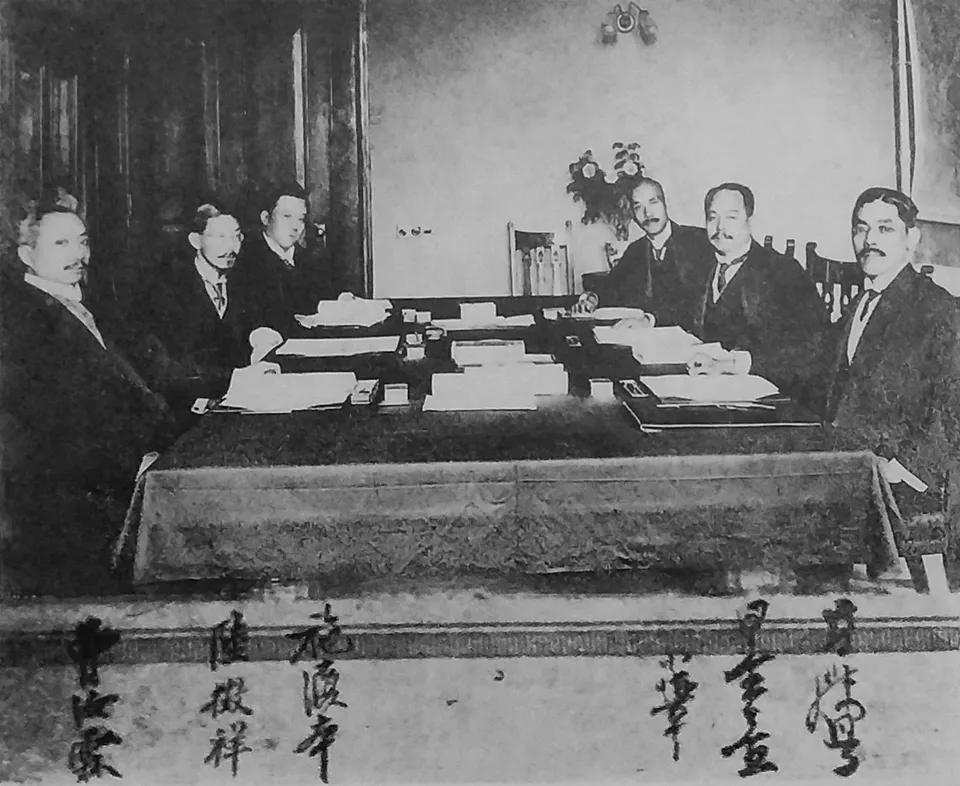
Unknown author · CC BY-SA 4.0 · Source
In August 1914 Japan declared war on Germany under the Anglo-Japanese Alliance, and in November took Qingdao and the German concessions in Shandong. With the European powers tied down by the war, the Ōkuma cabinet in January 1915 demanded that Yuan Shikai let Japan inherit Germany’s rights in Shandong, extend the leases on Port Arthur, Dalian and the South Manchuria Railway, and share control of the Hanyeping iron and coal company. Group Five even required China to take on Japanese advisers.
When talks dragged on Japan issued an ultimatum on 7 May, and on 9 May Yuan’s government accepted most of the demands, minus Group Five. The Chinese called it the “Day of National Humiliation” and boycotted Japanese goods.
The Twenty-One Demands were the starting point of Chinese anti-Japanese nationalism. When the Paris Peace Conference of 1919 decided to hand the Shandong rights to Japan, the anger exploded in the May Fourth Movement; Shandong returned to China only at the Washington Conference in 1922.