Walk to Canossa
Also called: Humiliation of Canossa, Investiture Controversy
Excommunicated in a dispute with Pope Gregory VII over the right to appoint clergy (investiture), Holy Roman Emperor Henry IV begged forgiveness at the castle of Canossa in January 1077.
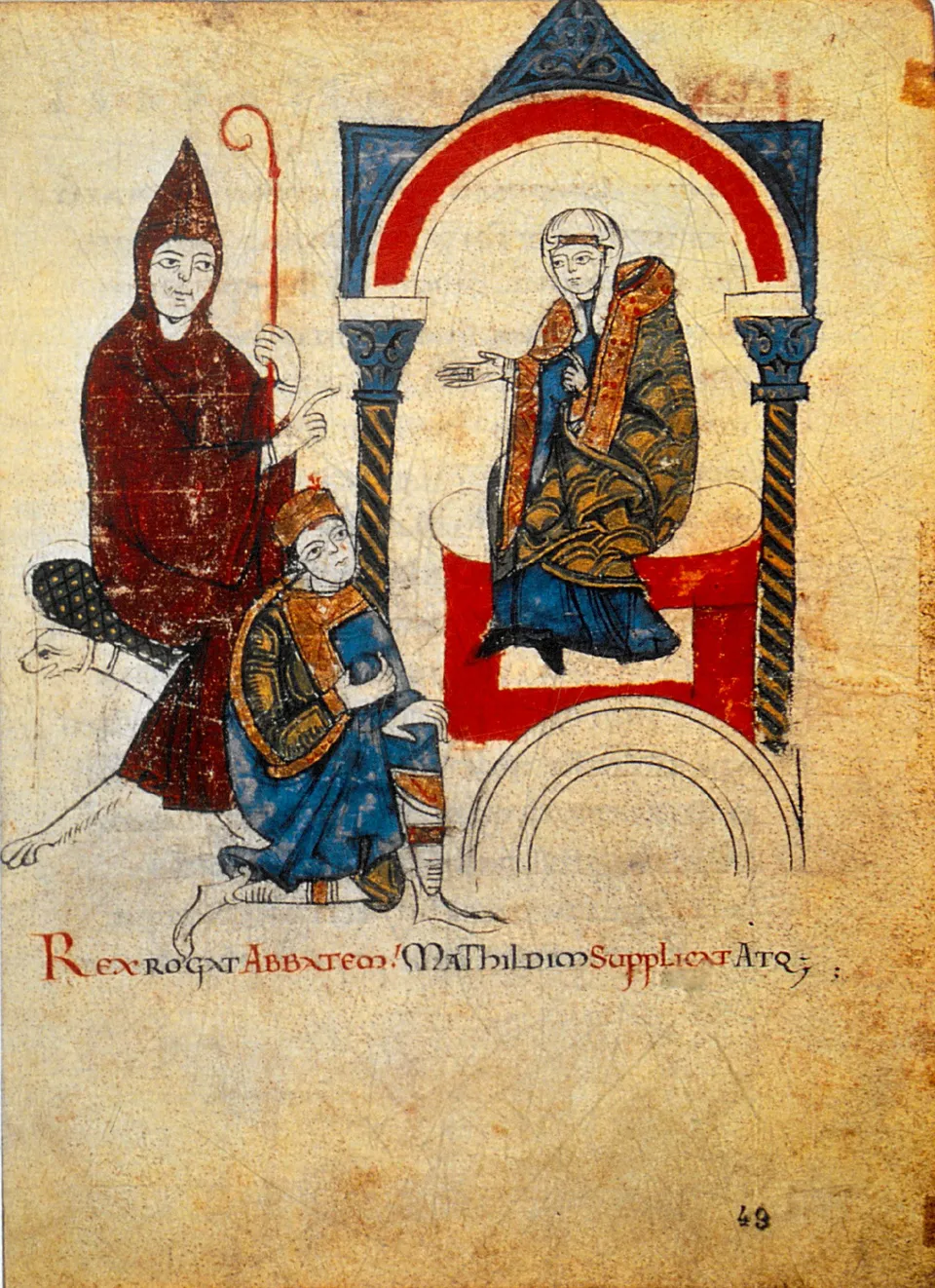
Donizo · Public domain · Source
Carrying on the reforming spirit of Cluny, Pope Gregory VII banned simony and clerical marriage and in 1075 forbade lay rulers to appoint clergy. When Henry IV, who relied on bishops to govern, declared the pope deposed, Gregory excommunicated him in 1076 and released his subjects from their oaths of loyalty.
When the princes threatened to elect a new king unless the excommunication was lifted, Henry crossed the Alps in midwinter and stood barefoot in the snow for three days before the castle of Canossa in northern Italy, where the pope was staying, until he was absolved (1077). The episode became a symbol of the supremacy of papal over imperial power.
Having recovered his strength, however, Henry took Rome in 1084, and Gregory VII was driven out and died at Salerno. The Investiture Controversy was settled for the time being by the Concordat of Worms in 1122, and papal power reached its height under Innocent III in the 13th century. At this time Goryeo was near the end of King Munjong’s reign, when its aristocratic society was at its most stable.