War of the Austrian Succession
Also called: Treaty of Aix-la-Chapelle (1748), Silesian Wars
When Maria Theresa inherited the Habsburg lands in 1740, Prussia invaded Silesia and France, Bavaria and others joined in; the Treaty of Aix-la-Chapelle (1748) confirmed her inheritance, but Silesia went to Prussia.
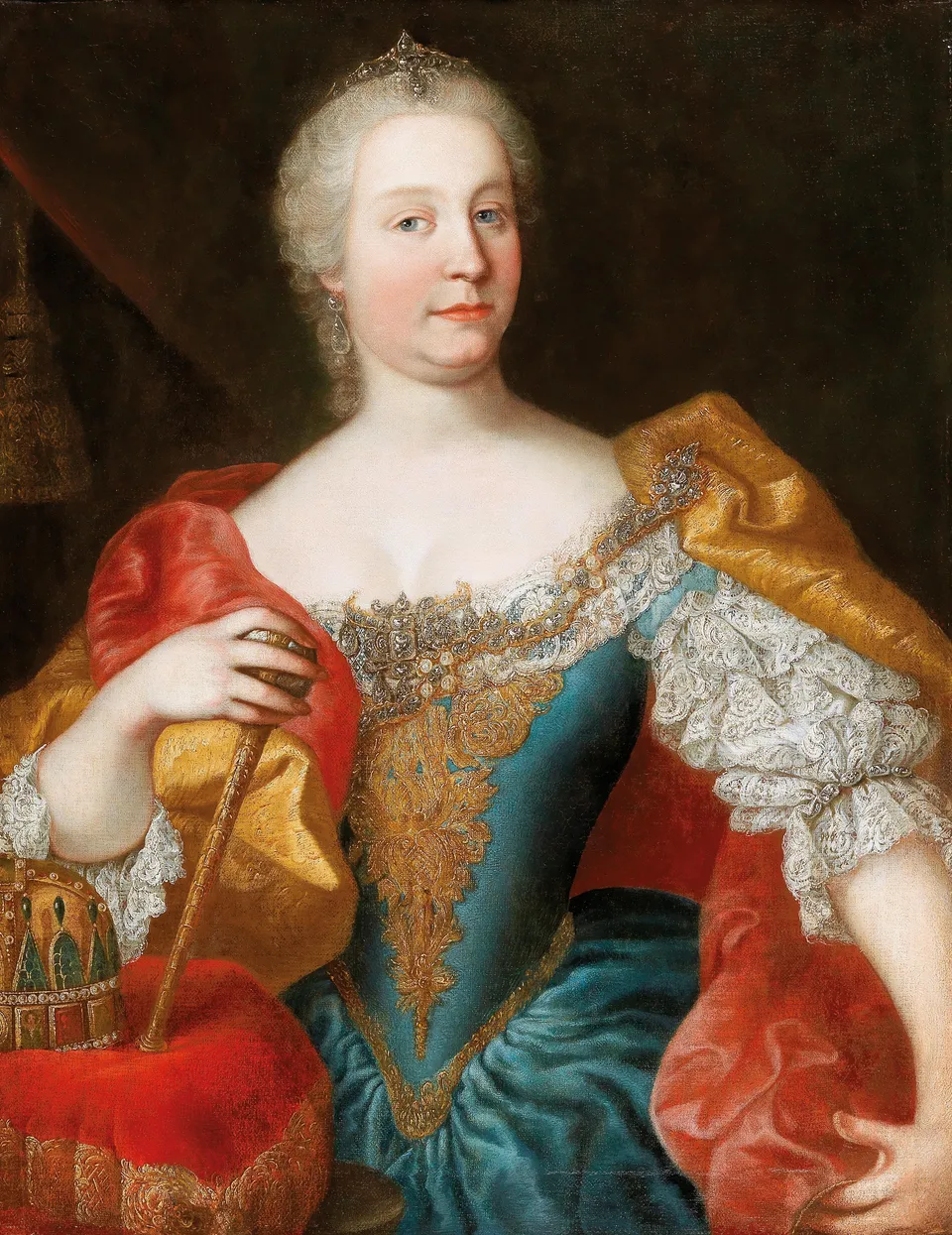
Workshop of Martin van Meytens · Public domain · Source
Emperor Charles VI, who had no son, sought through the Pragmatic Sanction to leave his lands to his daughter Maria Theresa, but when he died in October 1740 several states broke their word. That December Frederick II of Prussia invaded industrially rich Silesia and won at Mollwitz (1741); France, Bavaria and Spain sided with Prussia and Britain with Austria.
The 23-year-old Maria Theresa held on with the support of the Hungarian nobility, and the Treaty of Aix-la-Chapelle (1748) secured her inheritance and the imperial title for her husband Francis I, though she lost Silesia. She then strengthened her realm through centralisation, military and tax reform and compulsory schooling. At the same time in Joseon, King Yeongjo set up the Tangpyeong Stele (1742) in front of the National Academy.