Economy1939 – 1945
Forced Labour and Conscription
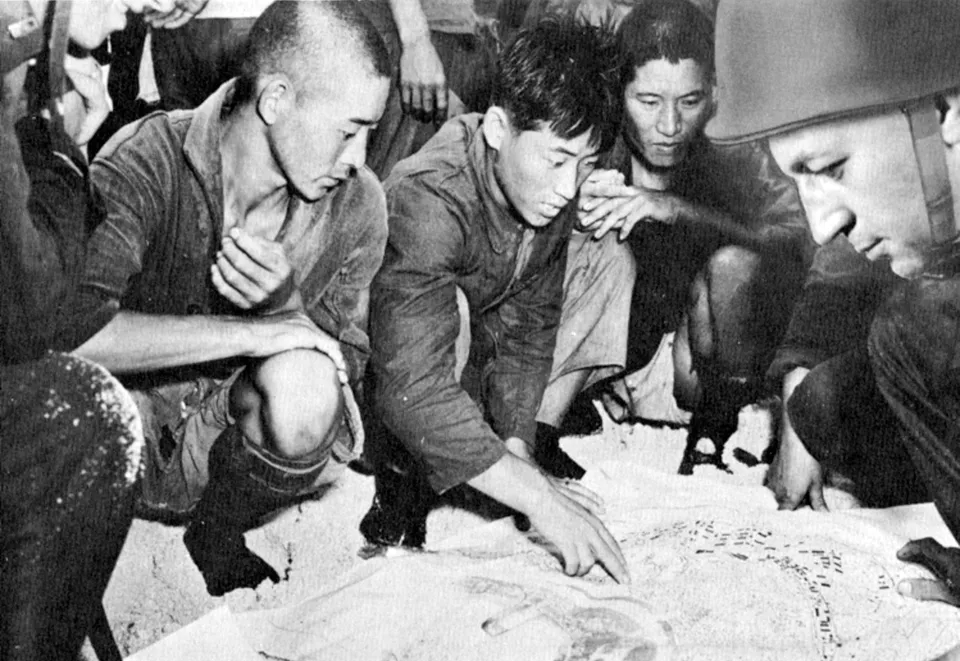
Japan forcibly took Koreans to coal mines, munitions plants and airfield construction in Japan, Sakhalin, the South Sea islands and elsewhere, and in the last years of the war conscripted them as soldiers.
Unknown author · Public domain · Source
Labour mobilization grew steadily more coercive, from "recruitment" (1939) to "government placement" (1942) and "requisition" (1944). Those taken worked in dangerous mines and construction sites for low pay under harsh treatment, and many never returned.
Military mobilization began with volunteers, took university and college students as "student volunteers" in 1943 and introduced conscription from 1944. Some escaped and joined the Korean Liberation Army.