National Mobilization Law and Wartime Exploitation
Japan enacted the National Mobilization Law and drew Korea’s people and materials into its wars of aggression at will, taking rice and even brassware and sending young people to battlefields and factories.
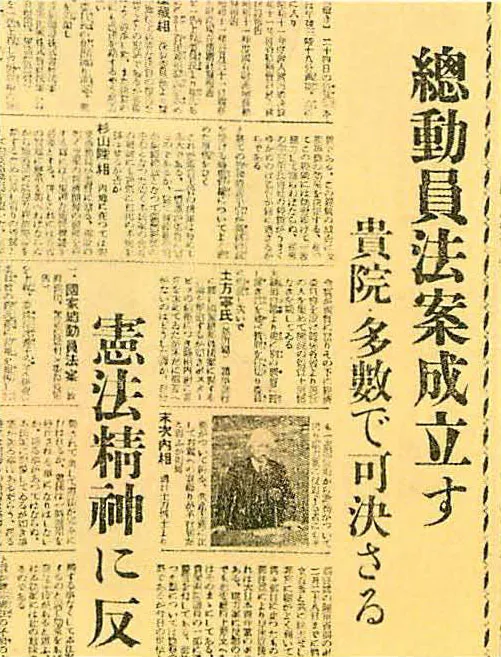
Unknown author · Public domain · Source
From the early 1930s Japan made Korea a supply base for continental expansion, building munitions industries in the north and pushing cotton in the south and sheep in the north. To ease rural discontent it ran the Rural Revitalization Campaign (1932) and issued the Agricultural Land Ordinance (1934).
In 1938, after the war with China began, the National Mobilization Law was applied to Korea, and daily life was controlled through the Korean League for National Spiritual Mobilization and its ten-household patriotic units. Rice was compulsorily purchased, food was rationed, and metal down to brass bowls, spoons and church bells was collected for weapons.
People were mobilized through the army special volunteer system (1938), the student volunteer system (1943), conscription (1944) and the National Requisition Ordinance (1939). Women were sent to factories under the Women’s Volunteer Labour Corps Ordinance (1944), and some were taken as Japanese military "comfort women".