Founding of the Weimar Republic
Also called: Weimar Constitution, Weimar Republic
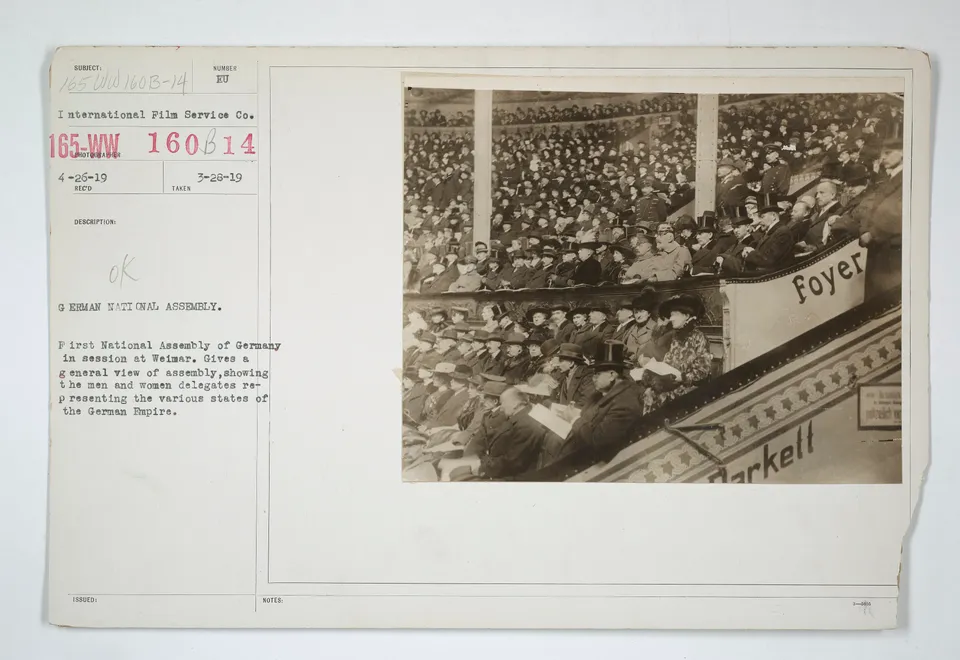
Germany’s National Assembly met at Weimar, elected Ebert president and drew up the Weimar Constitution — a democratic charter with universal suffrage for men and women and social rights.
Unknown author Unknown author or not provided · Public domain · Source
In January 1919 a National Assembly was elected in a vote in which women took part for the first time. Meeting at Weimar from 6 February, away from turbulent Berlin, it elected Ebert president and formed a coalition of the Social Democrats, the Centre Party and the Democrats.
The Weimar Constitution, promulgated on 11 August, established universal suffrage for men and women over twenty, proportional representation and referendums. Declaring that economic life must secure a decent existence for all, it also wrote in workers’ rights and social security, becoming a model for constitutional social rights.
But it gave the president sweeping powers to rule by emergency decree (Article 48), and the many small parties meant frequent changes of government. Attacked as the government that had accepted the Treaty of Versailles and battered by economic crisis, the republic was unstable, and Hitler later used these emergency powers to consolidate his rule.