Wonhyo Brings Buddhism to the People
Wonhyo taught the One Mind and the reconciliation of doctrines, and spread Pure Land devotion — salvation by chanting "Namu Amitabul" — among ordinary people.
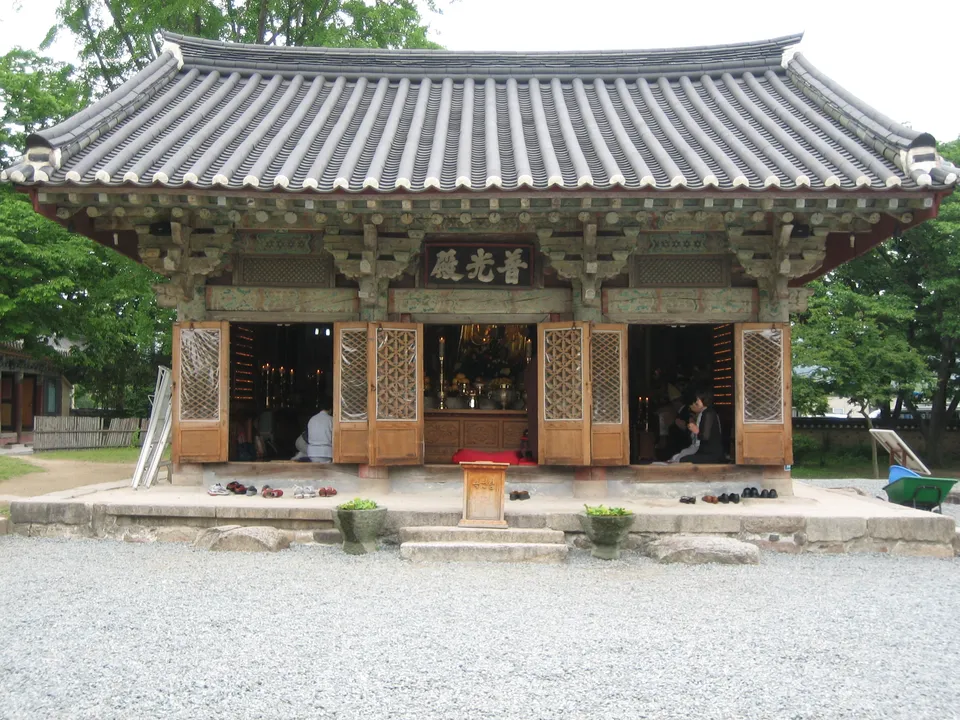
Alain Seguin · CC BY-SA 3.0 · Source
Setting out for Tang with Uisang in 661, Wonhyo is said to have drunk water at night in a tomb and found at dawn that it had pooled in a skull; realizing that "all things are made by the mind", he turned back. He taught that everything arises from the One Mind (ilsim), and that the disputes of the schools could be reconciled at a higher level (hwajaeng). His works include commentaries on the Awakening of Faith and the Vajrasamadhi Sutra and the Simmun hwajaeng-non.
Wonhyo taught that anyone could reach the Western Paradise simply by chanting "Namu Amitabul", and wandered the villages singing his Muae-ga, turning Buddhism from a faith of the aristocracy into one of the people. His son by Princess Yoseok was Seol Chong.