Conflict18th day, 7th month 660(Lunar)

Fall of Baekje

Allied Silla and Tang forces took the capital Sabi, and King Uija surrendered, ending Baekje.
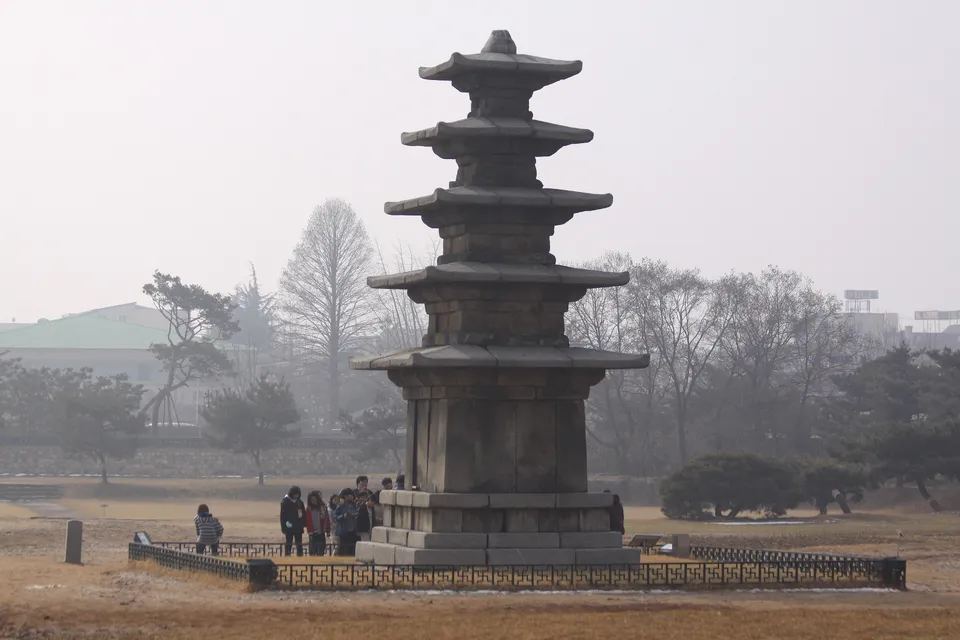
Jeongnimsa five-story pagoda, Buyeo — Tang general Su Dingfang carved a record of his conquest of Baekje on it

Kwon jung sik · CC BY-SA 4.0 · Source

Kim Yu-sin's 50,000 Silla troops broke Gyebaek's last stand at Hwangsanbeol while Su Dingfang's 130,000 Tang troops landed at Gibeolpo on the Geum estuary. Sabi fell on the 13th day of the seventh month and King Uija, who had fled to Ungjin, surrendered on the 18th. He was taken to Tang with some 12,000 of his people.

Tang set up five protectorates, including Ungjin, to rule Baekje directly, and restoration movements sprang up across the land.

The map in AD 660

OpenFreeMap © OpenMapTiles © OpenStreetMap contributors

States and rulers at the time
Baekje · fell — King Uija
Silla · allied force — King Muyeol
Tang · allied force — Emperor Gaozong
Places
Sabi (Busosanseong), Ungjin (Gongsanseong)

People

  • King UijaAD 660

    monarch · Last king of Baekje, who took Daeya Fortress from Silla but surrendered to the Silla–Tang allies

  • Kim Yu-sinAD 595 – AD 673

    commander · Silla general of Geumgwan Gaya royal descent who defeated Gyebaek and led the unification wars

  • Su DingfangAD 592 – AD 667

    commander · Tang general who crossed the sea with 130,000 troops to attack Baekje

  • King Muyeol (Kim Chun-chu)AD 603 – AD 661

    monarch · Twenty-ninth king of Silla, who forged the Tang alliance, became the first jingol king and conquered Baekje

1 part of this event

  1. Gyebaek met Kim Yu-sin’s 50,000 Silla troops with 5,000 picked men, won four clashes and finally fell.

Before and after

Related works

Dramatized works (films, dramas, novels) may differ from the historical record.

Themes that include this event

  • Wars of Korean UnificationAD 598 – AD 676

    From Goguryeo's wars with Sui and Tang to Silla's unification — eighty years of East Asian war on the peninsula

  • GongjuAD 475 – 1894

    From Ungjin, Baekje’s second capital, to Ugeumchi — the town on the Geum River that became the heart of Chungcheong

  • Buyeo2000 BC – 1376

    From the Songguk-ri village to Sabi, Baekje’s last capital — the Geum River town where Baekje culture bloomed and fell