Zhang Qian’s Missions to the Western Regions and the Silk Road
Also called: Silk Road, Silk Routes
Emperor Wu sent Zhang Qian to the Yuezhi to form an alliance against the Xiongnu. The alliance failed, but knowledge of the Western Regions opened the Silk Road linking China with western Asia and the Mediterranean.
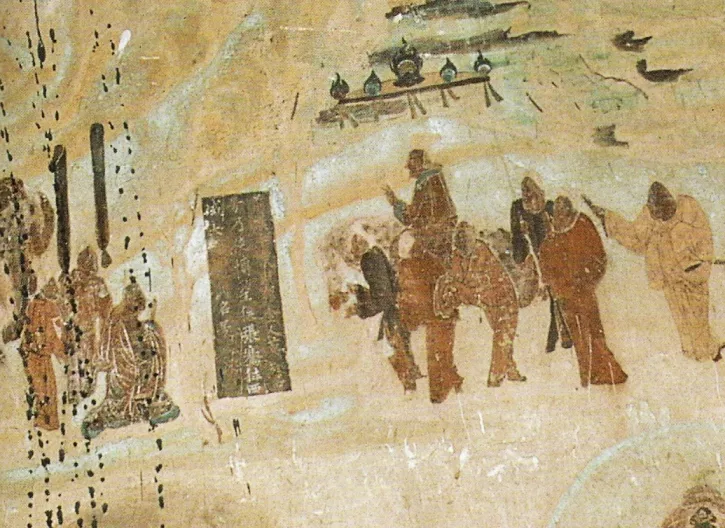
PHG · Public domain · Source
Around 139 BCE Emperor Wu sent Zhang Qian to the Yuezhi, who had been driven west by the Xiongnu, hoping to attack the Xiongnu from both sides. Captured by the Xiongnu on the way, Zhang Qian was held for over ten years before escaping and travelling through Dayuan (Ferghana) and Kangju to the Yuezhi on the Amu Darya. Settled in their new lands, the Yuezhi had no wish to fight, and he returned in 126 BCE after thirteen years. In 119 BCE he went on a second mission to the Wusun.
The alliance failed, but his reports on the states of the west led to Han expansion. Han set up the four commanderies of Wuwei, Zhangye, Jiuquan and Dunhuang along the Hexi Corridor, sent armies to Dayuan for its "blood-sweating" horses, and in 60 BCE established the Protectorate of the Western Regions over the oasis cities of the Tarim Basin.
Along the road from Chang’an through Dunhuang, across the Tarim Basin and the Pamirs to Parthia and Rome, silk and lacquerware travelled west, while grapes, pomegranates, walnuts, alfalfa, glass, spices — and Buddhism — came east. The name "Silk Road" was coined by the German geographer Ferdinand von Richthofen in the 19th century.