The Reign of Emperor Wu of Han
Also called: Salt and iron monopoly, Han Wudi
Emperor Wu made Confucianism the ideology of the state and greatly expanded Han territory by campaigns against the Xiongnu, Nanyue and Gojoseon, paying for them with salt and iron monopolies and price-stabilisation measures.
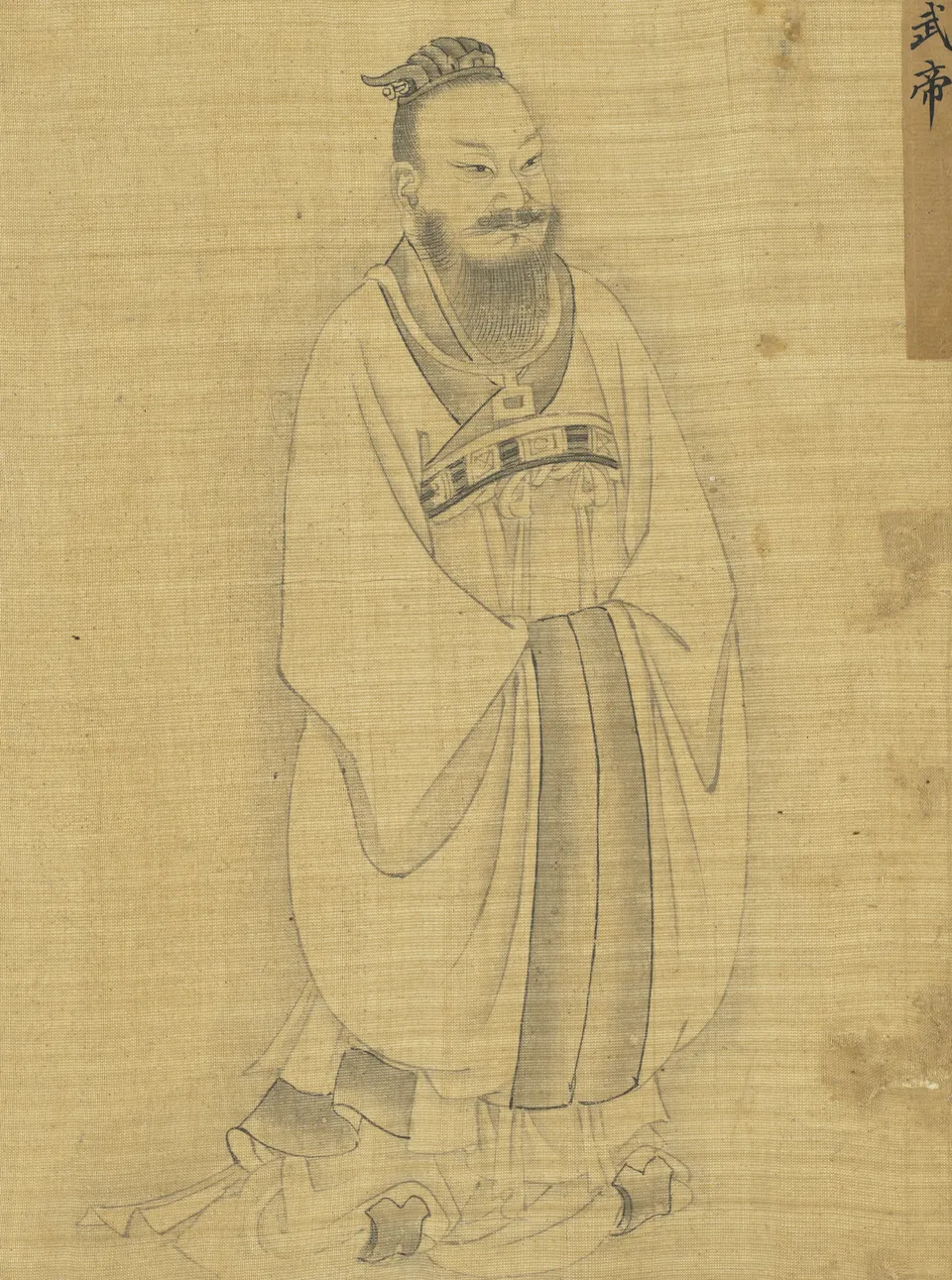
Unknown author · Public domain · Source
Building on the light taxes and full treasuries of Emperors Wen and Jing, Emperor Wu (r. 141–87 BCE) consolidated imperial rule. On the advice of Dong Zhongshu he made Confucianism the state ideology, appointing Erudites of the Five Classics (136 BCE) and founding the Imperial Academy in the capital (124 BCE), and recruited officials from among men recommended by the provinces for filial piety and integrity.
Abroad, his generals Wei Qing and Huo Qubing drove the Xiongnu north of the Gobi and commanderies were set up along the Hexi Corridor, while Zhang Qian’s missions opened the Silk Road. Nanyue was conquered in 111 BCE and commanderies reached into northern Vietnam; in 109 BCE Han attacked Gojoseon, destroyed it the following year and set up the Han commanderies on its land.
Constant campaigning emptied the treasury, so the state monopolised salt and iron (and for a time alcohol), introduced the equable-transport and price-stabilisation systems, and minted the wuzhu coin. The burden on merchants and commoners grew, and after Wu’s death the court debated the monopolies in 81 BCE (the Discourses on Salt and Iron).