Abbas I and Isfahan
Also called: Abbas the Great, Naqsh-e Jahan Square
The Safavid shah Abbas I reformed his army, drove back the Ottomans and the Portuguese and moved his capital to Isfahan, which grew so splendid it was called “half the world”.
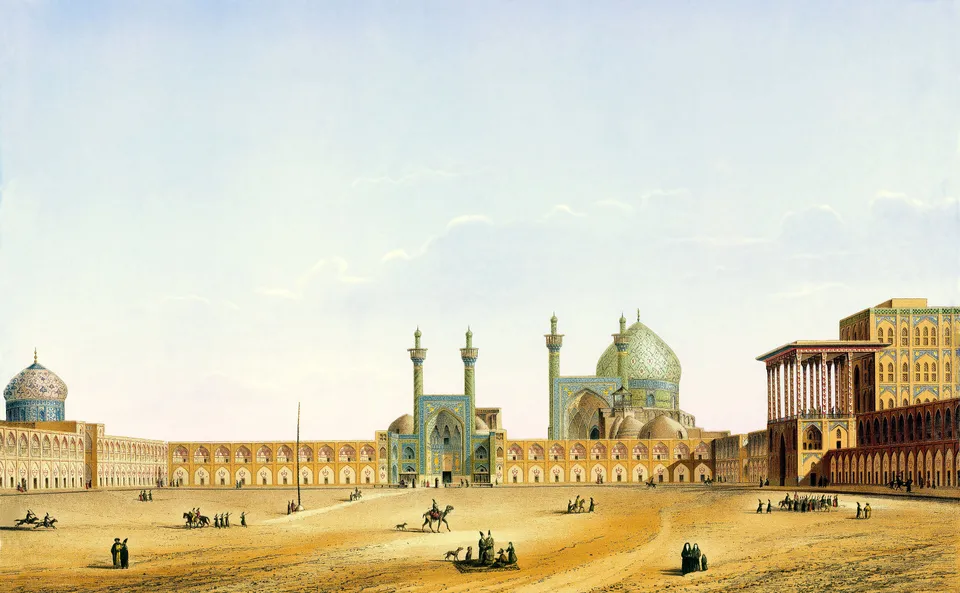
Pascal Coste · Public domain · Source
Abbas I, who came to the throne in 1588, built up a standing army of converted Georgian and Armenian slave-soldiers (ghulams), musketeers and artillery to replace the Qizilbash tribal warriors who had undermined royal power. With it he recovered Tabriz and the Caucasus from the Ottomans (1603–1607), and in 1622, with the help of the English East India Company, he took the island of Hormuz from the Portuguese.
Moving his capital to Isfahan in 1598, he laid out the vast Naqsh-e Jahan Square and around it built the Shah (Imam) Mosque, the Ali Qapu palace and the bazaar. He resettled Armenian merchants there to develop the silk trade, and European envoys came to his court. The saying arose that “Isfahan is half the world.” The dynasty later declined, and in 1722 Isfahan fell to the Afghans. During Abbas’s reign Joseon went through the Imjin War, and Gwanghaegun pursued his policy of neutral diplomacy.