Arirang
Also called: Arirang folk song
Korean folk songs with the refrain "Arirang". Every region has its own Arirang, and the song spread nationwide in the late 19th century. It became Intangible Cultural Heritage of Humanity in 2012.
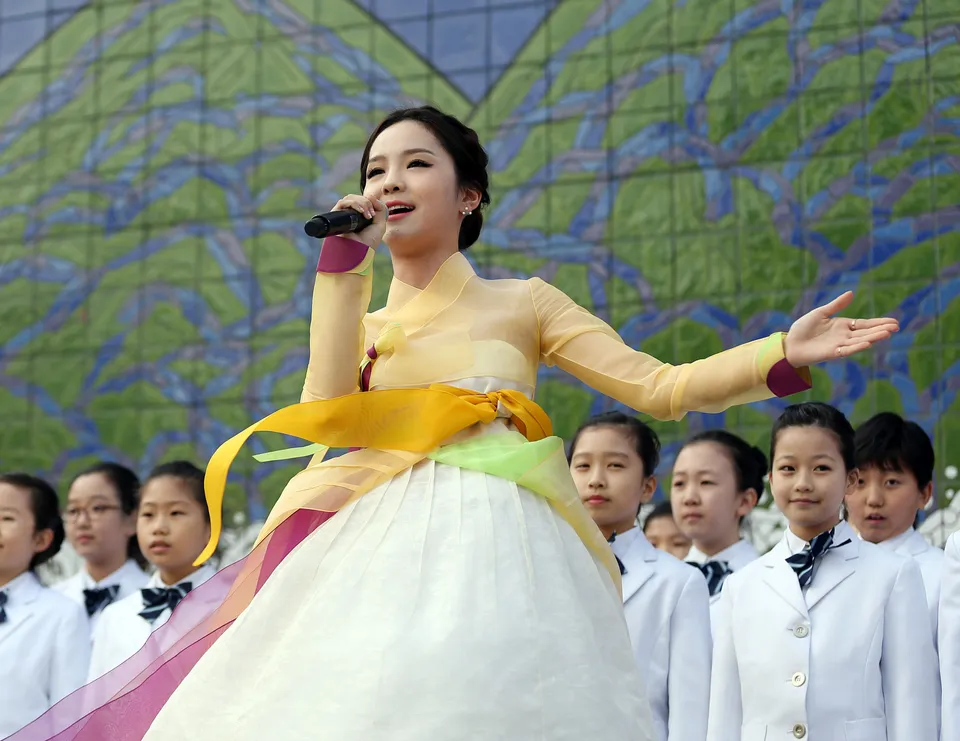
JEON HAN / Korean Culture and Information Service / Korea.net (www.korea.net) / Ministry of Culture, Sports and Tourism · CC BY-SA 2.0 · Source
Arirang is the general name for folk songs with a refrain such as "Arirang, arirang, arariyo". Jeongseon Arirang (Arari), Jindo Arirang and Miryang Arirang are the best known, and lyrics and melodies differ by region and period, so there are countless versions. Anyone can make up new verses, which makes it an open song.
One view holds that it spread widely through workers gathered from all over the country when Heungseon Daewongun rebuilt Gyeongbokgung (1865–1868). It became hugely popular as the theme song of Na Un-gyu’s 1926 film Arirang, and under Japanese rule it was sung as a song of grief and resistance for the lost nation and by Koreans abroad. It was inscribed by UNESCO as Intangible Cultural Heritage of Humanity in 2012; North Korea’s Arirang was inscribed separately in 2014.