Ashoka and the Spread of Buddhism
Also called: Pillars of Ashoka, Kalinga War
The Maurya emperor Ashoka united most of India and, repenting the horrors of his conquest of Kalinga, embraced Buddhism, ruled by dharma and spread the faith widely.
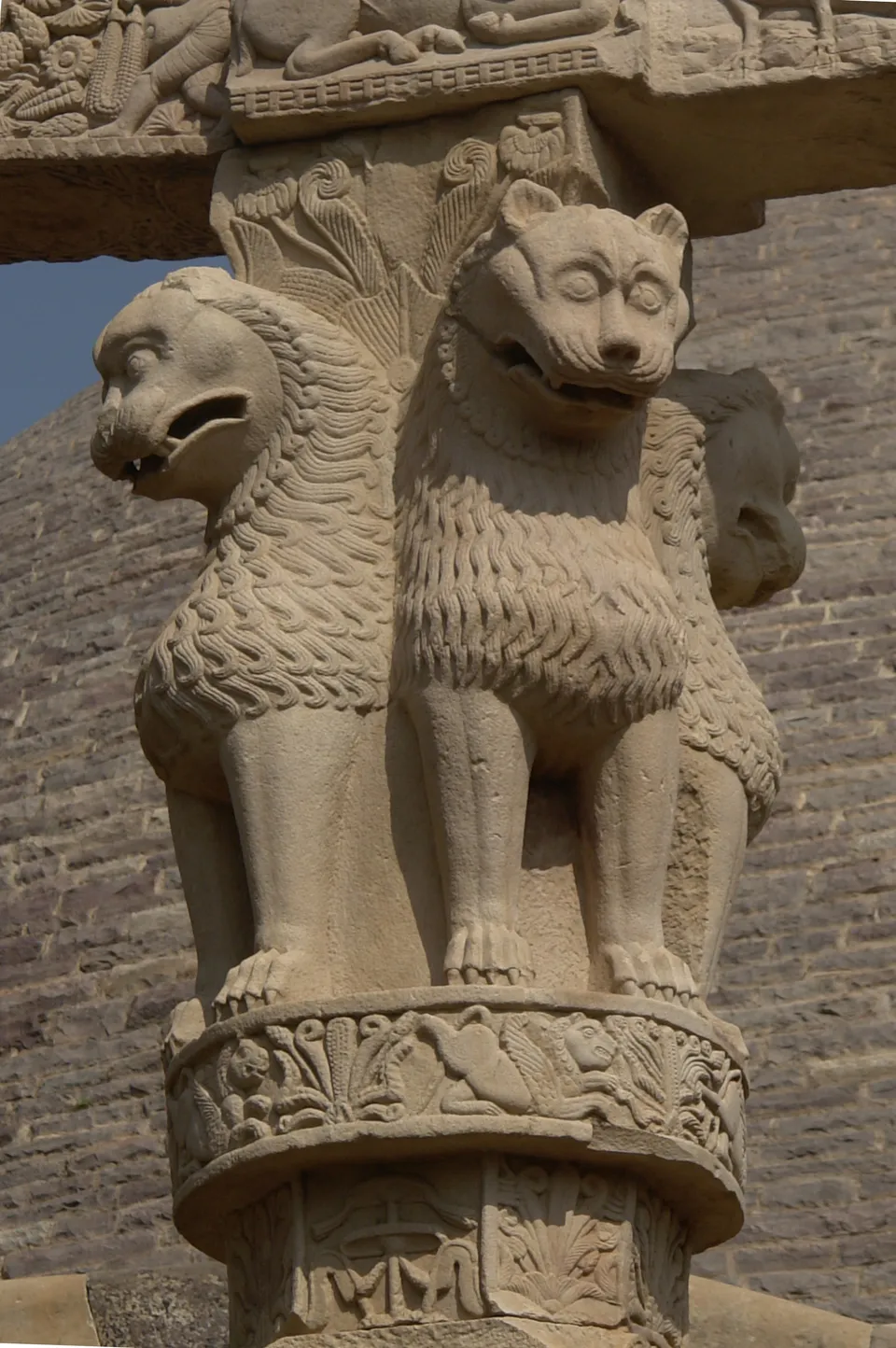
Yann ( talk ) · CC BY-SA 4.0 · Source
Ashoka, grandson of Chandragupta, conquered Kalinga on the east coast (today’s Odisha) about eight years into his reign, bringing all of India but the far south under his rule. In a rock edict he himself recorded that 100,000 people were killed and 150,000 carried off, and expressed deep remorse. He turned to Buddhism and sought to rule not by force but by dharma — refraining from killing, respecting parents and teachers, and tolerating other faiths.
He had these teachings carved on rocks and stone pillars across the empire, mostly in Brahmi script, and in Greek and Aramaic in the northwest. The lion capital of his pillar at Sarnath is today India’s national emblem. He built stupas such as the Great Stupa at Sanchi and, according to tradition, convened the Third Buddhist Council at Pataliputra to settle the scriptures. He sent missionaries in all directions — his son Mahinda to Sri Lanka — and Buddhism spread from there to Southeast Asia (Theravada Buddhism).
After Ashoka’s death the empire declined quickly and gave way to the Shunga dynasty around 185 BCE. His reign is usually dated c. 268–232 BCE.