Battle of Bunker Hill
British troops stormed the militia’s earthworks on the heights above Boston three times and took the hill, but lost more than a thousand killed and wounded.
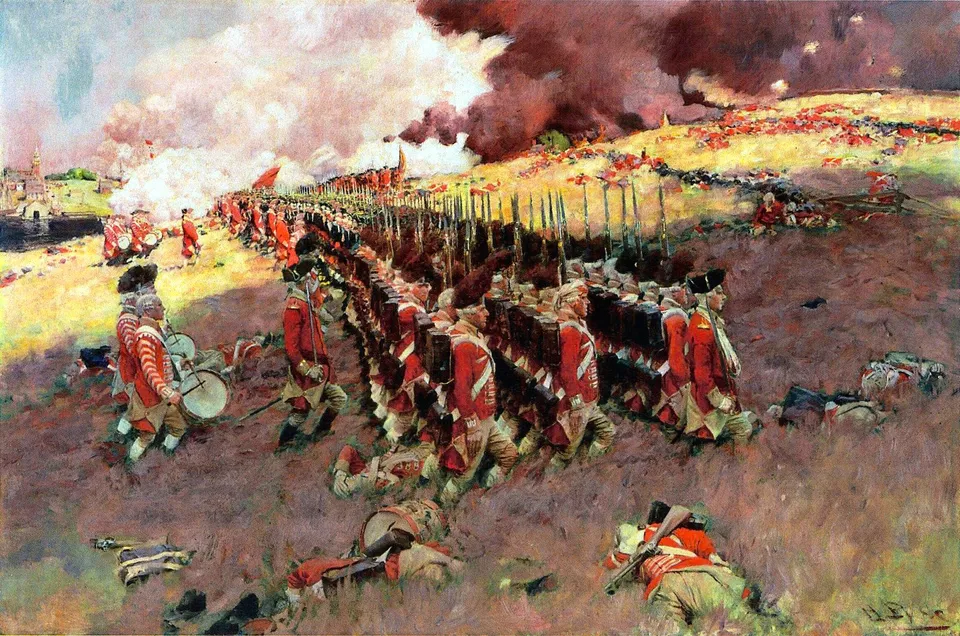
Howard Pyle · Public domain · Source
After Lexington and Concord more than ten thousand militiamen ringed Boston. On the night of 16 June 1775 they threw up an earthen redoubt on Breed’s Hill on the Charlestown peninsula. The next day some 2,200 British troops crossed by boat and climbed the slope; short of powder, the militia held their fire until the enemy was close — “Don’t fire until you see the whites of their eyes” is the famous line, though who said it is uncertain.
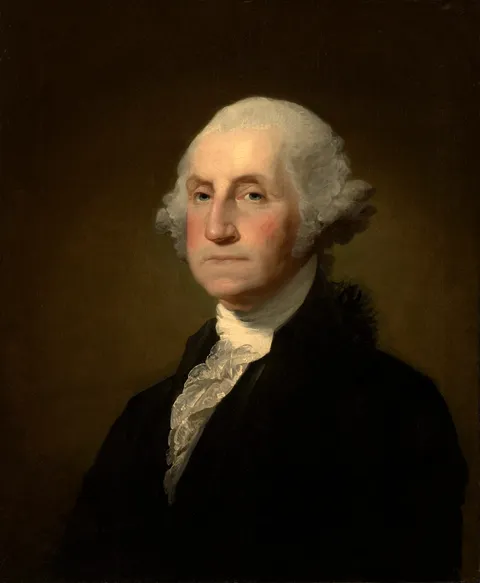
Twice thrown back, the British carried the hill on the third assault as the militia ran out of ammunition. But they paid with more than a thousand killed and wounded, far more than the militia’s roughly 450. The fight took its name from nearby Bunker Hill. Two days earlier the Continental Congress had chosen George Washington of Virginia as commander-in-chief of the Continental Army.