Battles of Lexington and Concord
British regulars sent to seize militia arms at Concord exchanged fire with colonial militia at Lexington and Concord — the first fighting of the American Revolutionary War.
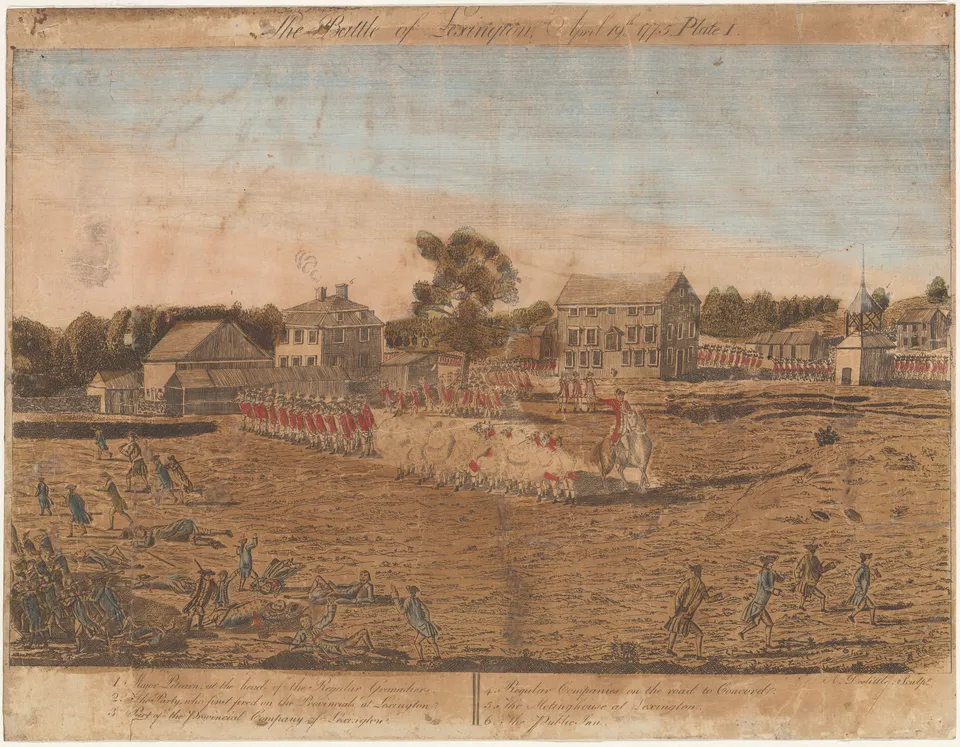
Amos Doolittle · Public domain · Source
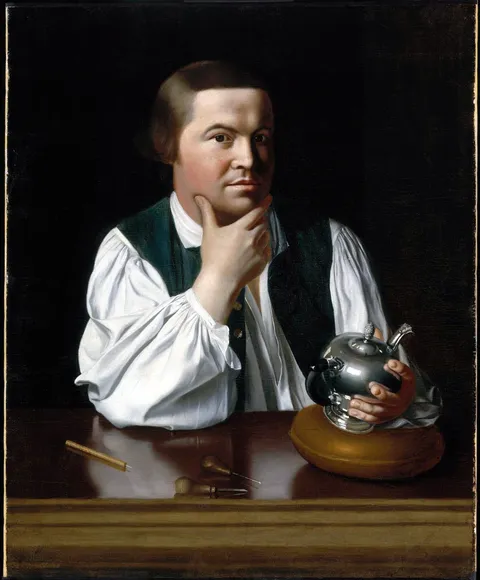
On the night of 18 April 1775 General Gage, governor of Massachusetts, sent some 700 regulars from Boston to seize the militia’s arms hidden at Concord. Two lanterns hung in the steeple of the Old North Church — “one if by land, two if by sea”, the signal that the troops were crossing the Charles by boat — and Paul Revere and William Dawes rode to rouse the towns.
At dawn on the 19th about 80 militiamen on Lexington Green faced the regulars; after shots whose origin is still unknown, eight militiamen lay dead. At Concord’s Old North Bridge the militia drove the British back. On the 30-odd km road back to Boston thousands of gathering militia fired from behind walls and trees, and more than 270 British soldiers were killed or wounded. The militia went on to besiege Boston. The poet Emerson later called the first volley at Concord “the shot heard round the world.”