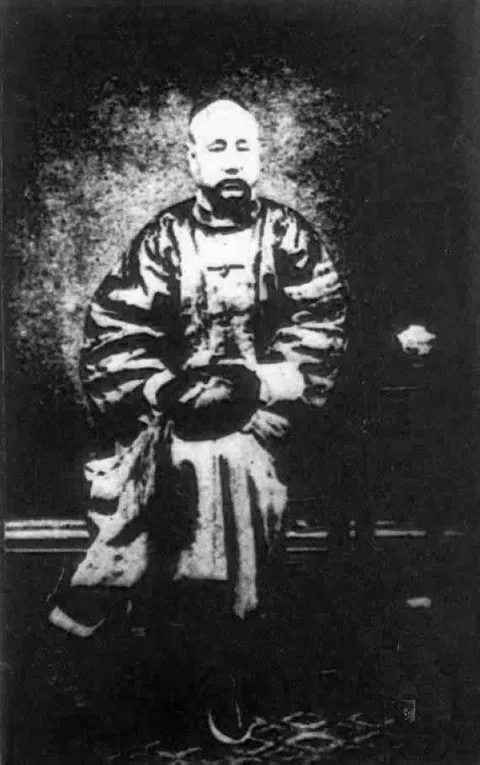
Battle of the Dagu Forts (1859)
Also called: Second Battle of the Taku Forts
In June 1859 a British squadron escorting the British and French envoys on their way to ratify the Treaty of Tianjin tried to force the mouth of the Hai River and was badly beaten by Senggelinqin’s rebuilt Dagu forts.
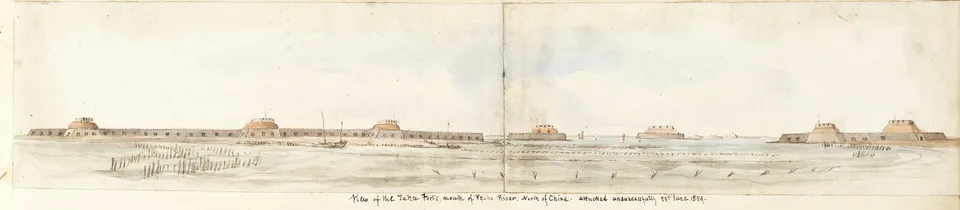
Lt. Col. William Godfrey Rayson Masters R.M. · Public domain · Source
The Treaty of Tianjin was to be ratified in Beijing within a year. In June 1859 the British minister Frederick Bruce and the French minister Bourboulon arrived at the mouth of the Hai River with warships. The Qing asked them to land at Beitang to the north and travel on to Beijing, but the British admiral James Hope decided to break through the chains and stakes across the river mouth and sail up to Tianjin.
On 25 June the guns of the Mongol general Senggelinqin, who had rebuilt the forts destroyed the year before, opened fire together. The British lost several gunboats, and the men who landed on the mudflats were cut down as they floundered in the mire. Casualties passed 400 and Admiral Hope himself was wounded. The neutral American commodore Josiah Tattnall, declaring that "blood is thicker than water", towed British boats into action.
It was a rare Qing victory over a Western force since the Opium War. But it emboldened the court to stall on the treaty, and the next year the allies returned in far greater strength.