Battle of Jutland
Also called: Battle of the Skagerrak
The largest naval battle of the First World War, fought between the British Grand Fleet and the German High Seas Fleet in the North Sea off Denmark’s Jutland peninsula. Britain lost more, but kept command of the sea.
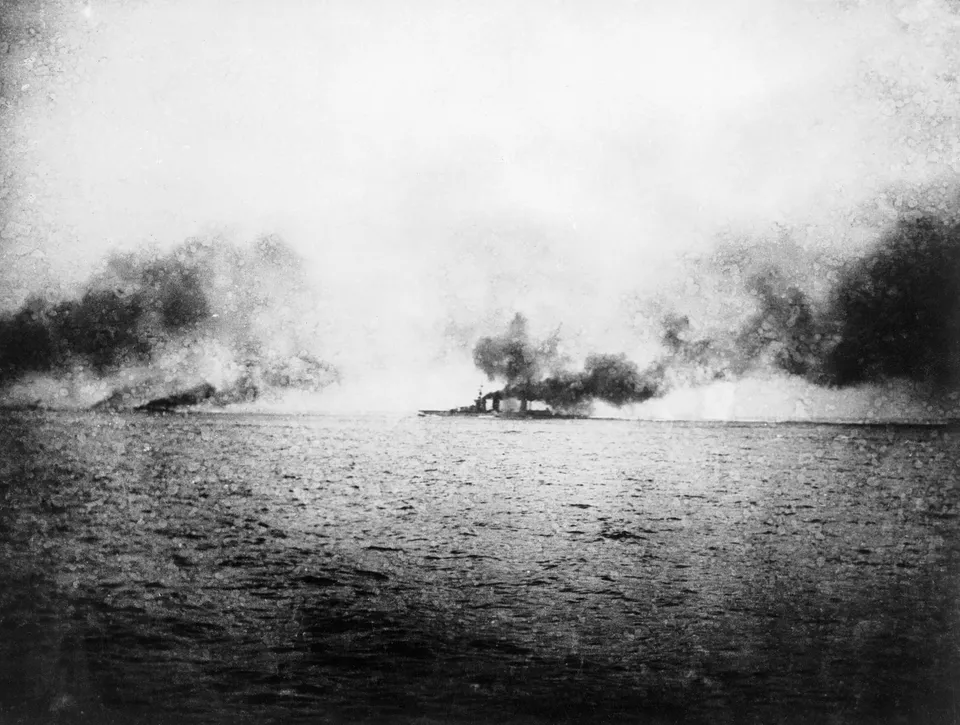
Unknown author · Public domain · Source
On 31 May 1916 the German High Seas Fleet, seeking to break the British blockade, put to sea and ran into the British Grand Fleet. Nearly 250 warships, battleships and battlecruisers among them, fought on into the next day. Britain lost more ships, including three battlecruisers, and over 6,000 men; German dead numbered around 2,500.
Germany claimed victory, but its fleet returned to port and never again challenged the British fleet head-on. With the blockade unbroken, Germany relied all the more on U-boats against merchant shipping, which led to unrestricted submarine warfare and America’s entry into the war.