Battle of the Somme
A great British and French offensive to break the German trench line along the river Somme. British casualties on the first day alone neared 60,000, and tanks were used for the first time. In four and a half months the Allies advanced little more than 10 kilometres.
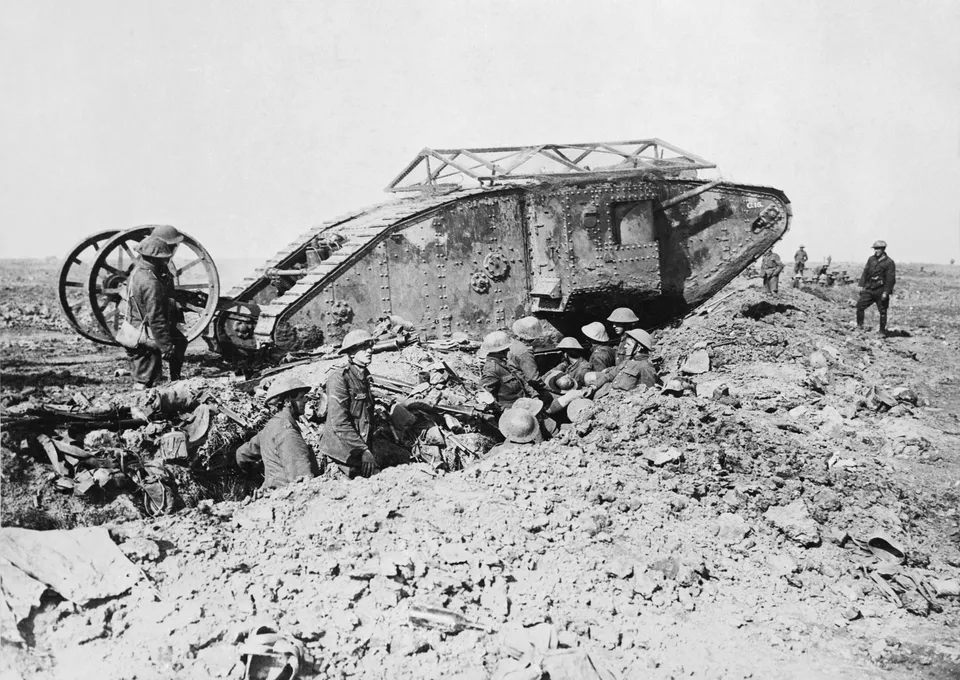
Ernest Brooks · Public domain · Source
To relieve the French at Verdun and break through on the Western Front, the British under Haig and the French opened an offensive on the Somme on 1 July 1916. A week-long bombardment left most of the Germans’ deep dugouts and barbed wire intact, and the British infantry, advancing into machine-gun fire, suffered nearly 60,000 casualties on the first day alone — the bloodiest day in the history of the British army.
On 15 September the British sent tanks into battle for the first time. The offensive went on until mid-November, but the Allies gained little more than 10 kilometres, and casualties on both sides exceeded one million. The battle showed how heavily machine guns, artillery and trenches favoured the defender.