Battle of Verdun
The German army attacked the fortress zone of Verdun for nearly ten months to bleed the French army dry, but the French under Pétain held. Casualties on both sides reached some 700,000.
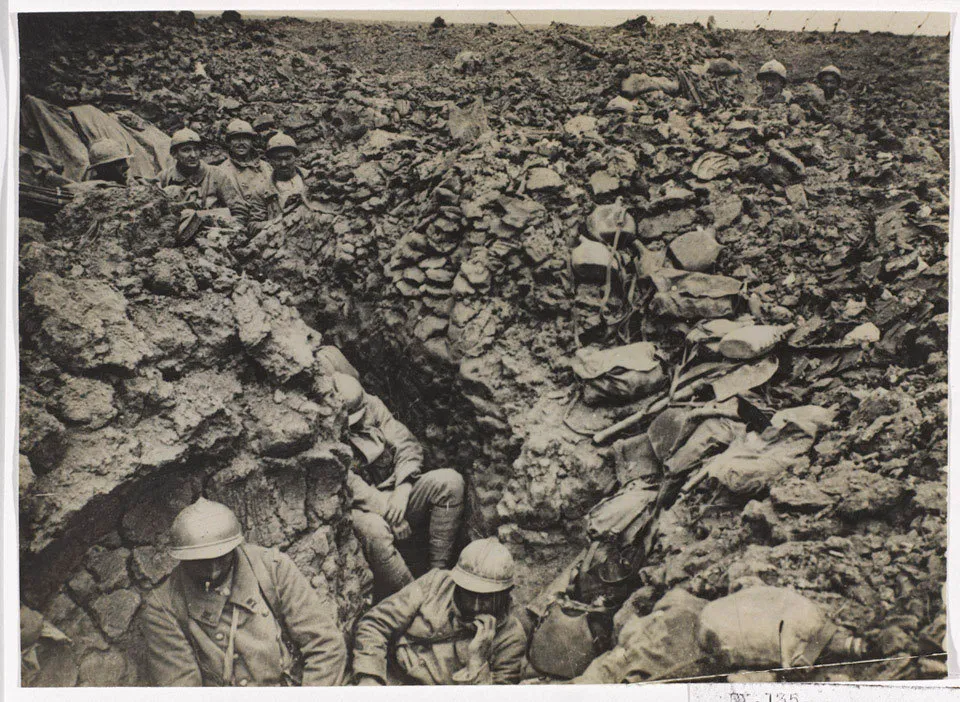
French photographer · Public domain · Source
On 21 February 1916 the German chief of staff Falkenhayn struck at Verdun, a fortress city France could never give up, aiming to wear the French army out through bloodletting. After a colossal bombardment Fort Douaumont soon fell, but Pétain, in charge of the defence, kept men and supplies moving without pause along the one remaining supply road, the “Sacred Way”, and held on.
Under the slogan “They shall not pass” the French rotated unit after unit through the line, and once the Somme offensive began in July the German attack lost its force. The French retook Douaumont in October and the battle ended in December. In ten months some 700,000 men were killed or wounded on both sides, yet the front barely moved. Verdun became the symbol of attrition and, for the French, of endurance to the end.